Sanctions Screening for B2B Buyers: How to Vet Trade Partners Against OFAC and Denied Party Lists
Sanctions screening for B2B buyers isn't just a compliance checkbox - it's a buyer-risk discipline. Here's how OFAC, denied party, and export control screening actually works, and where most B2B credit teams get it wrong.
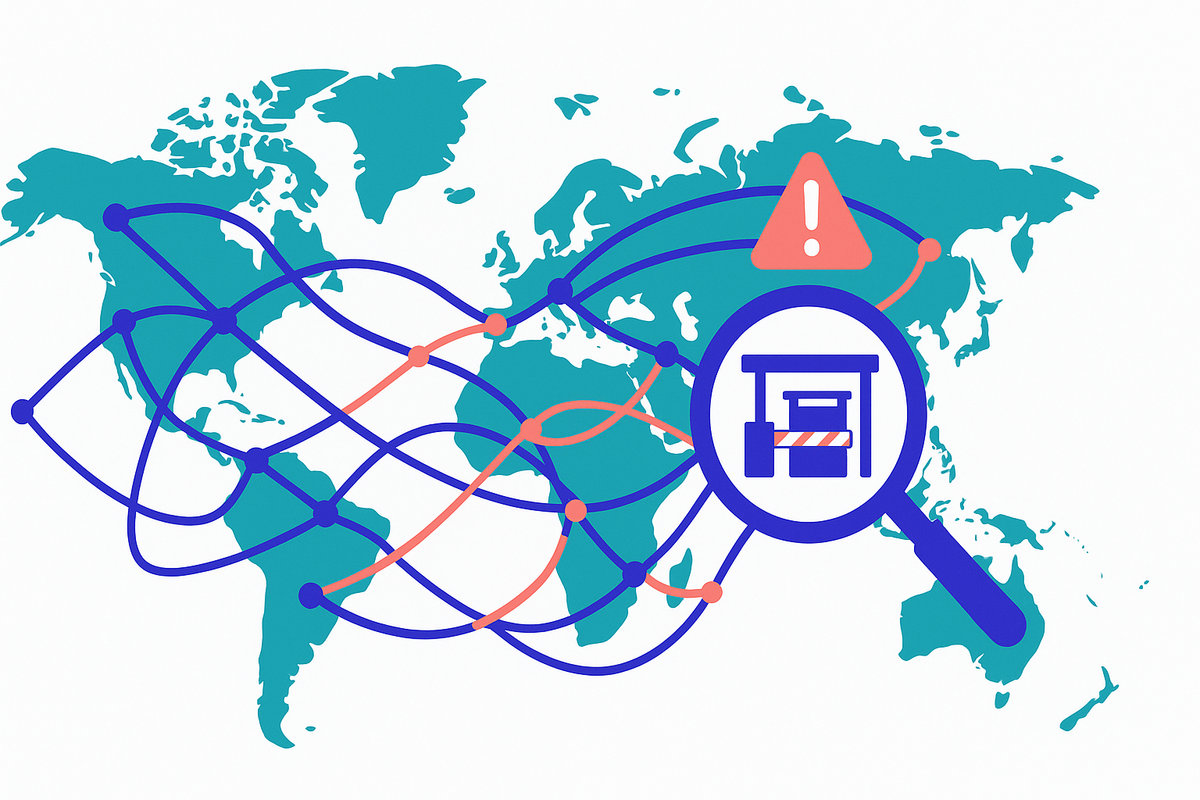
Why Sanctions Screening Belongs in the Buyer-Risk Conversation
Most finance and credit teams file sanctions screening under "legal's problem." It sits next to export licenses and trade compliance training - something the legal or compliance department handles once, at onboarding, and rarely revisits.
That's a mistake, and it's the same mistake credit teams used to make with credit risk before continuous buyer monitoring became standard practice. Sanctions status isn't static. A buyer that screens clean today can appear on a denied party list next quarter - because of a new designation, a change in beneficial ownership, or a corporate restructuring that connects them to a sanctioned entity you'd never have found through a basic name check.
Sanctions screening for B2B buyers sits at the intersection of two disciplines that are usually run by different teams: trade compliance (is this transaction legal?) and credit risk (will this buyer pay?). The uncomfortable truth is that a buyer who fails sanctions screening isn't just a legal risk - they're often a credit risk too. Entities that end up on sanctions lists frequently have opaque ownership, unstable operations, or business models built around evading scrutiny. The same red flags that trigger a sanctions hit often correlate with the kind of counterparty that's a poor credit risk regardless of the sanctions question.
This guide covers what sanctions screening actually involves for B2B sellers extending trade credit, where the process breaks down in practice, and how to build it into your existing buyer verification workflow rather than treating it as a separate, one-time gate.
What Sanctions Screening Actually Checks
"Sanctions screening" is shorthand for checking a buyer - and often their owners, directors, and affiliated entities - against a set of government-maintained restricted party lists. The most commonly referenced lists include:
- OFAC Specially Designated Nationals (SDN) List - maintained by the U.S. Treasury's Office of Foreign Assets Control, covering individuals and entities subject to U.S. sanctions
- BIS Denied Persons and Entity Lists - maintained by the U.S. Commerce Department's Bureau of Industry and Security, covering export control restrictions
- EU Consolidated Sanctions List - the European Union's equivalent, covering EU-wide restrictions
- UN Security Council Sanctions List - global sanctions adopted under UN Security Council resolutions
- Country-specific lists - the UK's OFSI list, and national lists maintained by other jurisdictions where you do business
A basic sanctions screen checks the buyer's legal name against these lists. A more rigorous screen also checks:
- Beneficial owners - because sanctions rules generally apply if a sanctioned party owns 50% or more of an entity, even if the entity itself isn't listed
- Directors and key officers - some regimes flag exposure through control, not just ownership
- Trade names and aliases - sanctioned entities frequently operate under multiple trading names
- Fuzzy name matches - transliteration differences (particularly for names originating in non-Latin scripts) mean exact-match screening misses a meaningful share of true hits
This is where sanctions screening connects directly to KYB (know your business) verification. You can't screen beneficial owners you haven't identified. A sanctions screen run against only the entity's registered name, without an underlying ownership-structure lookup, is a screen with a structural blind spot - and it's the single most common failure point in mid-market compliance programs.
Where B2B Credit Teams Get Sanctions Screening Wrong
Treating it as a one-time onboarding gate
The most common failure is screening a buyer once, at account opening, and never again. Sanctions designations happen continuously - OFAC alone adds and removes entries on a rolling basis, often triggered by geopolitical events with no advance warning. A buyer that cleared screening in January can be designated in June. If your only screening checkpoint is onboarding, you have no mechanism to catch that. This is the exact same structural gap continuous buyer monitoring was built to solve for credit risk - and it applies just as directly here.
Screening the entity but not the ownership chain
A buyer's legal entity name might be entirely clean while a majority shareholder sits on a sanctions list. This is a known evasion pattern - restructuring through intermediate holding companies to distance a sanctioned party from the operating entity's name. Effective screening requires identifying beneficial owners down to the individual level (or as far down as jurisdiction and available records allow) and screening each layer, not just the buyer's registered name.
Relying on exact-match name screening
Names transliterated from non-Latin alphabets (Arabic, Cyrillic, Chinese script, and others) can have multiple valid Latin-character spellings. "Mohammed," "Muhammad," and "Mohamed" might all refer to the same person depending on the transliteration convention used. Exact-string screening tools miss these variants unless they use fuzzy-matching algorithms designed specifically for this problem. This matters most for buyers and their owners based in - or with beneficial ownership connections to - regions covered by the Middle East and North Africa country risk guide and other non-Latin-script markets.
Ignoring sectoral and geographic sanctions
Not all sanctions target named individuals or entities. Sectoral sanctions restrict specific types of transactions with specific industries in specific countries - certain financial services, energy, or defense-adjacent transactions with particular jurisdictions, for example - even when no individual party is designated by name. A buyer can pass every name-based screen and still represent a restricted transaction if the underlying trade falls into a sanctioned sector or involves a comprehensively sanctioned country. This is a separate check from party-list screening and requires knowing which countries and sectors carry sanctions exposure for your specific goods and services.
No process for false positives
Common names generate false-positive hits constantly - a buyer named "Ahmed Trading Co." will frequently match against SDN entries that have nothing to do with the buyer in question. Without a documented process for resolving false positives (using date of birth, registration number, address, or other identifying details to rule out a match), teams either waste enormous time manually chasing every hit, or - worse - start ignoring hits altogether because "it's always a false positive." Both outcomes are dangerous. The first burns compliance resources; the second is exactly how a real hit gets missed.
Building Sanctions Screening Into Your Buyer Verification Workflow
Sanctions screening works best when it's a stage in the same process you already use to verify a new B2B buyer before extending credit, not a separate compliance silo that runs on its own schedule.
1. Screen at the same point you collect KYB data. When you're already gathering entity registration details, beneficial ownership information, and director names for credit underwriting, run the sanctions screen against that same dataset. You've already done the hard part - identifying who actually owns and controls the buyer - so screen while that information is fresh rather than requesting it again for a separate compliance step.
2. Set a re-screening cadence, not a one-time event. Tie sanctions re-screening to whatever cadence you already use for credit monitoring - monthly or quarterly automated re-checks against updated list data, with immediate ad hoc screening triggered by ownership changes, new designations affecting the buyer's country or sector, or unusual payment behavior.
3. Document your false-positive resolution process. Every hit needs a documented outcome: confirmed match (escalate immediately, halt the transaction, involve legal), or resolved false positive (with the specific identifying detail that ruled it out - registration number, date of birth, address). Regulators and auditors want to see the reasoning, not just a clean/flagged binary.
4. Weight sanctions exposure into your risk tiering. A buyer in a high-sanctions-risk geography or sector doesn't need to be a confirmed hit to warrant tighter terms. Building sanctions-adjacent risk into the same risk assessment framework you use for credit risk - rather than treating "passed sanctions screening" as a separate pass/fail gate - gives you a more complete picture of buyers who are technically clean but structurally higher-risk.
Want to check a buyer's risk profile - including ownership structure and geographic exposure - in 60 seconds? Try BuyersIntelligence.ai - free.
Sanctions Screening and Country Risk Are Two Sides of the Same Coin
If you sell internationally, sanctions exposure rarely shows up randomly across your buyer book - it clusters geographically. Buyers and their beneficial owners connected to comprehensively sanctioned countries, or countries subject to extensive sectoral sanctions, carry structurally higher screening burden regardless of how clean any individual entity looks on paper.
This is why sanctions screening should sit alongside, not separate from, the broader country risk work you're already doing for Latin America, the Middle East and North Africa, and other regions with elevated compliance complexity. A buyer's country risk profile and their sanctions screening burden are correlated, not coincidental - the same regions that carry higher political and currency volatility (see our guide to currency risk in B2B trade) often carry more layered ownership structures and more frequent sanctions-list activity.
What Sanctions Screening Doesn't Tell You
It's worth being precise about scope. A clean sanctions screen tells you the buyer and their identified owners don't currently appear on the lists you checked. It does not tell you:
- Whether the buyer will pay on time
- Whether the buyer is financially stable
- Whether the buyer's ownership structure will change next quarter
- Whether a sanctions designation is imminent based on the buyer's country, sector, or business relationships
Sanctions screening is a legal gate, not a risk score. Teams that treat "passed sanctions screening" as equivalent to "safe to extend credit" are conflating two different questions. The buyer who clears every list check can still be a payment-timing risk, an overleveraged risk, or an ownership-concentration risk covered under entirely separate frameworks - which is exactly why sanctions screening needs to run as one input into a broader buyer verification process, not as a substitute for one.
For sellers extending trade credit on open account terms rather than requiring letters of credit, the sanctions question and the credit-risk question need to be answered together, at the same underwriting checkpoint, using the same ownership and identity data - not routed through two disconnected teams running two disconnected processes on two different timelines.
Ready to move faster on buyer vetting without cutting corners on compliance? BuyersIntelligence.ai gives your team a single view of buyer risk - ownership structure, geographic exposure, and financial signals - so sanctions screening and credit underwriting stop living in separate spreadsheets.
Stop guessing about buyer risk. Get instant buyer intelligence.
Try BuyersIntelligence.ai - Free →