Country Risk Guide: Selling on Credit to the Middle East and North Africa
Extending B2B trade credit to buyers in the Middle East and North Africa? This country risk guide covers payment culture, legal frameworks, regulatory complexity, and practical strategies for protecting receivables across MENA markets.
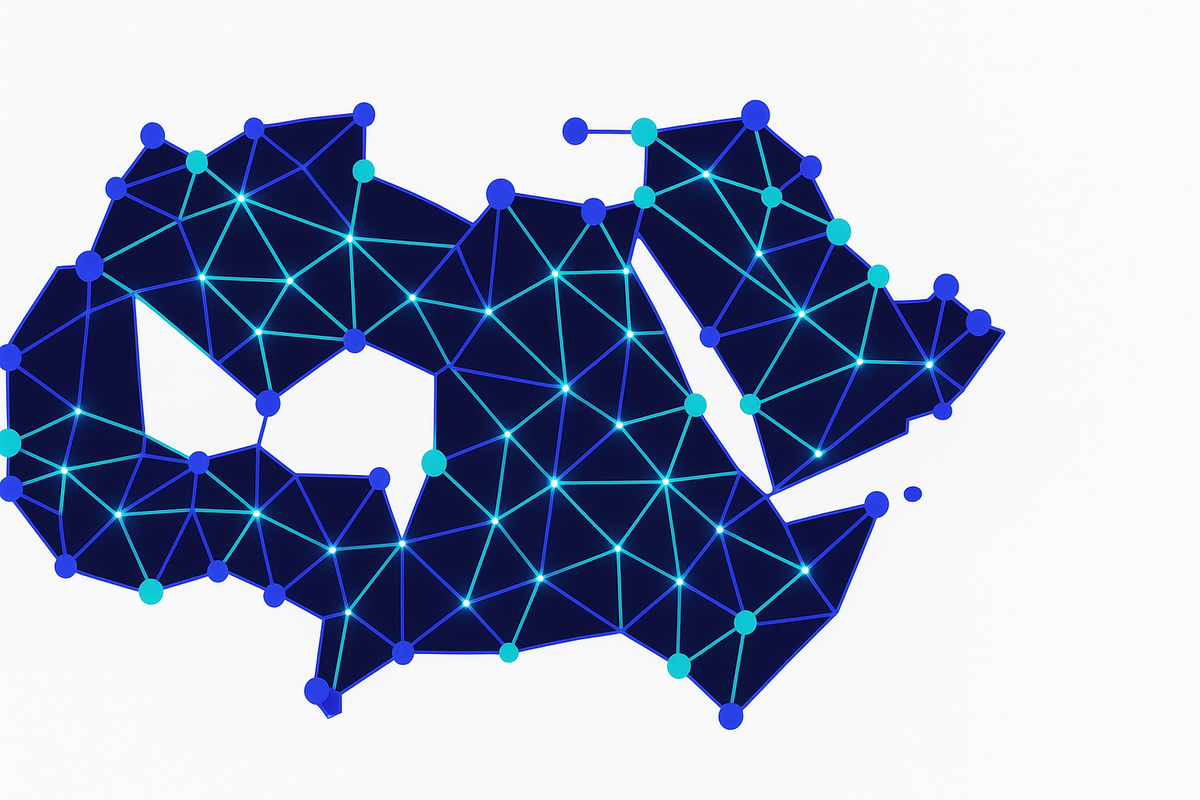
The Middle East and North Africa (MENA) region is a paradox for B2B sellers extending trade credit. On one hand, it includes some of the wealthiest economies on earth - the UAE, Saudi Arabia, Qatar - with sophisticated banking systems and deep liquidity. On the other hand, it includes markets where political instability, sanctions, opaque corporate structures, and entirely different legal traditions create risks that catch Western finance teams off guard.
Country risk Middle East North Africa B2B trade isn't a single profile. It's a spectrum that ranges from near-developed-market conditions in Dubai to extreme complexity in Libya, Iraq, or Yemen. The finance teams that succeed in this region are the ones who build nuanced, market-by-market credit policies rather than treating MENA as a monolith.
This guide breaks down country risk for the key B2B trade markets across MENA - the Gulf Cooperation Council (GCC) states, Egypt, Morocco, Tunisia, and the broader region - and provides practical frameworks for extending credit safely.
The MENA B2B Trade Landscape
MENA represents approximately $3.5 trillion in combined GDP, with B2B trade heavily concentrated in several sectors:
- Oil and gas equipment and services - the backbone of Gulf economies and a major driver of cross-border B2B purchasing
- Construction and infrastructure - massive ongoing projects in Saudi Arabia (NEOM, Vision 2030), the UAE, Qatar, and Egypt
- Healthcare and pharmaceuticals - rapidly growing across the region as populations expand and healthcare systems modernize
- Food and agriculture - the region imports approximately 85% of its food, creating enormous B2B trade volumes
- Technology and telecommunications - accelerating digitization across both Gulf and North African markets
For international suppliers, these sectors offer strong demand and, in many cases, buyers with deep pockets. But between you and getting paid sits a layer of country risk that requires careful navigation.
The Gulf Cooperation Council (GCC): High Wealth, Unique Risks
The GCC - Saudi Arabia, UAE, Qatar, Kuwait, Bahrain, and Oman - is where most of the region's B2B trade volume concentrates.
UAE (Focus: Dubai and Abu Dhabi)
Risk Level: Low-Medium
The UAE is the region's trading hub, with Dubai functioning as a re-export gateway for the entire Middle East, South Asia, and East Africa. The legal and business infrastructure is among the most developed in the region.
Payment culture: UAE businesses generally adhere to agreed payment terms, though Net 60-90 is standard across most industries. Late payment of 15-30 days beyond terms is common but not extreme by regional standards. The UAE's bounced check laws (historically a criminal offense, though recently reformed) created a strong deterrent against non-payment.
Legal environment: The UAE has a dual legal system - federal courts operating under civil law and free zone courts (particularly the Dubai International Financial Centre - DIFC). The DIFC courts operate under common law principles, are English-language, and provide efficient dispute resolution. For significant B2B relationships, structuring contracts under DIFC jurisdiction offers stronger creditor protections.
Key risks: - Sponsor/ownership structures - many businesses operate through local sponsor (kafeel) arrangements, making true ownership and liability murky - Free zone fragmentation - a company registered in one free zone operates under different rules than one in the mainland or another free zone - Trading company risk - Dubai's role as a re-export hub means many buyers are trading intermediaries with limited assets. The company may be a thin entity between your goods and the end buyer - Credit data availability - improving through Al Etihad Credit Bureau (AECB), but coverage of smaller companies remains limited
Saudi Arabia
Risk Level: Medium
Saudi Arabia is the region's largest economy and is undergoing massive transformation through Vision 2030. Construction, manufacturing, and services sectors are booming, creating enormous demand for imported goods and services.
Payment culture: Government entities and large conglomerates in Saudi Arabia are known for slow payment. Government-linked projects commonly see payment cycles of 90-180 days. Private sector buyers are generally faster (Net 30-60) but still slower than Western norms. Relationship and personal trust play a significant role in payment prioritization.
Legal environment: Saudi Arabia's legal system is based on Sharia law, supplemented by royal decrees and regulations. Commercial dispute resolution has modernized through the Board of Grievances and the new Commercial Courts established in 2017. The Saudi Center for Commercial Arbitration (SCCA) provides an increasingly reliable arbitration framework.
Key risks: - Government payment delays - if your buyer is a government contractor, their ability to pay you depends on the government paying them. This creates a chain of payment risk - Saudization (Nitaqat) compliance - businesses must meet local employment quotas. Non-compliant companies can face operational restrictions that affect their ability to do business - Cultural norms around debt - Islamic finance principles influence attitudes toward interest and penalties, which may limit your ability to charge late payment fees
Other GCC Markets
Qatar (Risk: Low-Medium) - Small but wealthy market with massive infrastructure spending. Payment culture is generally reliable, particularly among government-linked entities. Limited buyer diversity - a few large players dominate most sectors.
Kuwait (Risk: Medium) - Conservative market with slower decision-making processes. Payment cycles can be long (60-90 days) but defaults are relatively uncommon among established businesses.
Bahrain and Oman (Risk: Medium) - Smaller markets with less diversified economies. Bahrain's financial sector is sophisticated, but non-financial businesses may have thinner balance sheets. Oman faces fiscal challenges that can trickle down to private sector payment capacity.
Navigating buyer risk across MENA's diverse markets? BuyersIntelligence.ai provides real-time buyer risk profiles that cut through corporate opacity - tracking financial health, payment patterns, and legal standing across the Middle East and North Africa.
North Africa: High Potential, Higher Complexity
North African markets offer significant B2B trade opportunities but come with substantially higher country risk than the Gulf states.
Egypt
Risk Level: Medium-High
Egypt is the largest market in North Africa by population (105+ million) and a major importer across virtually every sector. However, currency devaluation, capital controls, and bureaucratic complexity make credit extension challenging.
Payment culture: Payment delays are endemic in the Egyptian market. Net 60-90 is standard, and actual payment often runs 30-60 days beyond agreed terms. Cash flow management among Egyptian businesses tends to be reactive rather than proactive, meaning even solvent companies pay late.
Legal environment: Egypt's commercial courts function but are slow (2-5 years for resolution). Contract enforcement is possible but expensive relative to many receivable sizes. Arbitration through the Cairo Regional Centre for International Commercial Arbitration (CRCICA) is a viable alternative.
Key risks: - Currency devaluation - the Egyptian pound has experienced dramatic devaluations (50%+ in some years), devastating for sellers with EGP-denominated receivables - Capital controls and dollar scarcity - even when buyers have EGP to pay, converting to USD and remitting internationally has been a persistent challenge - Public sector payment chains - government and quasi-government entities are major buyers but notorious for extended payment cycles - Import restrictions - periodic import controls to manage foreign currency reserves can delay or block purchases
Morocco
Risk Level: Medium
Morocco has positioned itself as a stable manufacturing hub with strong automotive, aerospace, and textile sectors. Its proximity to Europe, relatively stable political environment, and improving business infrastructure make it one of the more accessible North African markets.
Payment culture: Net 60 is standard. The Moroccan government has implemented late payment legislation requiring public entities to pay within 60 days and private entities within specified contractual terms. Compliance is improving but not universal. Typical late payment runs 15-30 days beyond agreed terms.
Legal environment: Based on French civil law, Morocco's commercial courts are reasonably functional. The country has a relatively mature arbitration framework, and foreign judgments from certain jurisdictions can be enforced through exequatur proceedings.
Key risks: - MAD currency management - the Moroccan dirham is pegged to a basket (EUR/USD), providing more stability than most regional currencies, but exchange controls exist - Family-owned business opacity - many large Moroccan businesses are family-controlled with limited financial disclosure - Regional economic dependencies - some sectors are heavily dependent on European demand, creating indirect risk
Tunisia
Risk Level: Medium-High
Tunisia offers a small but active B2B market, particularly in textiles, automotive components, and agriculture. Political instability since 2011 has created economic headwinds, and the Tunisian dinar has depreciated significantly.
Payment culture: Payment terms of Net 60-90 are standard. Late payment is common, with average overdue periods of 30-45 days. The country's banking sector has struggled with non-performing loans, reflecting broader corporate payment difficulties.
Sanctions and Compliance Risk
MENA is one of the most sanctions-dense regions globally. Before extending credit to any buyer in the region, you must verify:
- Country-level sanctions - comprehensive sanctions programs currently affect Syria, Iran, and certain aspects of trade with other MENA countries
- Entity-level sanctions - individual companies and persons may be sanctioned even in otherwise open markets. OFAC (US), EU sanctions lists, and UK sanctions lists must all be checked
- Dual-use goods - many products commonly traded in B2B channels (electronics, chemicals, certain software) are subject to export controls
- Anti-money laundering - MENA's position as a trading crossroads creates AML risks that affect KYB compliance
Failure to comply with sanctions isn't just a financial risk - it's a legal and reputational catastrophe. Build sanctions screening into every buyer onboarding process, not as an afterthought.
Islamic Finance Considerations
When selling on credit in MENA, you will encounter buyers who operate under Islamic finance principles. Key implications:
- Interest (riba) - charging interest on late payments may be unenforceable or culturally unacceptable. Consider using late payment fees structured as liquidated damages rather than interest
- Gharar (uncertainty) - excessive uncertainty in contracts is avoided under Islamic law. Clear, specific payment terms are more important here than in other markets
- Murabaha arrangements - some buyers may propose cost-plus financing structures instead of traditional credit terms. Understanding these structures can open doors that conventional terms cannot
This doesn't mean you need to become an expert in Islamic finance. It means your contracts and credit terms should be drafted with awareness of these principles to avoid creating unenforceable provisions.
Risk Mitigation Strategies for MENA
Tier Your Markets
Build a tiered framework that reflects the real risk differences across the region:
Tier 1 - Lower Risk (UAE-DIFC, Qatar): - Standard credit terms (Net 30-60) - Normal buyer verification - Credit limits based on buyer financials
Tier 2 - Medium Risk (Saudi Arabia, Kuwait, Morocco, UAE-mainland): - Conservative initial terms (Net 30, extending to 60 after track record) - Enhanced verification including bank references and trade references - Credit limits at 70-80% of Tier 1 equivalent
Tier 3 - Higher Risk (Egypt, Tunisia, Oman, Bahrain): - Secured terms initially (LCs, advance payment, documentary collections) - Full due diligence including entity verification and site checks - Credit limits at 50% of Tier 1 equivalent - Credit insurance strongly recommended
Tier 4 - High Risk / Restricted (Libya, Iraq, Yemen, Syria, Iran): - Prepayment or confirmed irrevocable LC only - Full sanctions screening mandatory - Legal counsel required before any credit extension
Use Letters of Credit Strategically
LCs remain the workhorse payment instrument in MENA trade, far more than in Western B2B commerce. Major banks across the GCC (Emirates NBD, Saudi National Bank, QNB) and North Africa (Attijariwafa, CIB Egypt) are experienced with documentary trade finance. For new buyer relationships, requiring an LC for the first 3-5 transactions is standard practice and not viewed negatively.
Denominate in Hard Currency
Always denominate contracts in USD or EUR when possible. This is generally accepted across MENA and eliminates the currency devaluation risk that has burned countless sellers in Egypt, Tunisia, and other non-GCC markets. Where local currency invoicing is unavoidable, build currency adjustment clauses into your contracts.
Invest in Relationship Building
Relationships drive payment priority across the entire MENA region more than contractual terms do. Regular engagement, in-person visits, and treating buyers as partners rather than transaction counterparties materially reduces default risk. This is not soft advice - it's a measurable risk mitigation strategy in relationship-driven markets.
Monitor Continuously
MENA markets are dynamic. Currency devaluations, sanctions changes, political developments, and regulatory shifts can alter a buyer's risk profile overnight. Continuous monitoring is essential - annual credit reviews are dangerously insufficient for this region.
Key Metrics to Watch
- Currency movements - particularly EGP, TND, and non-pegged currencies. Sudden devaluation is the single biggest external risk to your MENA receivables
- Sovereign credit ratings - Moody's, S&P, and Fitch ratings for MENA sovereigns directly impact the credit capacity of domestic businesses
- Oil prices - Gulf economies remain correlated with oil despite diversification efforts. Sustained price drops affect government spending, which cascades through the private sector
- Sanctions updates - monitor OFAC, EU, and UK sanctions lists at least monthly for entity-level changes
- Capital control changes - particularly in Egypt and North Africa, new restrictions on foreign currency access can block payments even from willing buyers
- PMI and trade data - purchasing managers' indices and trade flow data provide leading indicators for sector-level demand and payment capacity
The Bottom Line
Country risk Middle East North Africa B2B trade demands a market-by-market approach. The Gulf states offer near-developed-market conditions for well-structured deals, while North African markets require more protective instruments and closer monitoring. Across the entire region, relationship investment, sanctions compliance, and currency risk management are non-negotiable elements of any credit strategy.
The sellers who build differentiated credit frameworks for MENA - rather than applying a one-size-fits-all approach - will capture significant market share while their competitors either avoid the region entirely or learn expensive lessons through write-offs.
Ready to sell on credit across the Middle East and North Africa with confidence? BuyersIntelligence.ai provides real-time buyer intelligence, payment behavior tracking, and automated risk monitoring across MENA markets - so you can extend trade credit without flying blind. Start your free assessment today.
Stop guessing about buyer risk. Get instant buyer intelligence.
Try BuyersIntelligence.ai - Free →