Country Risk Guide: Selling on Credit to India
Extending B2B trade credit to Indian buyers? This country risk guide covers India's payment culture, legal enforcement, regulatory landscape, and practical strategies to protect your receivables.
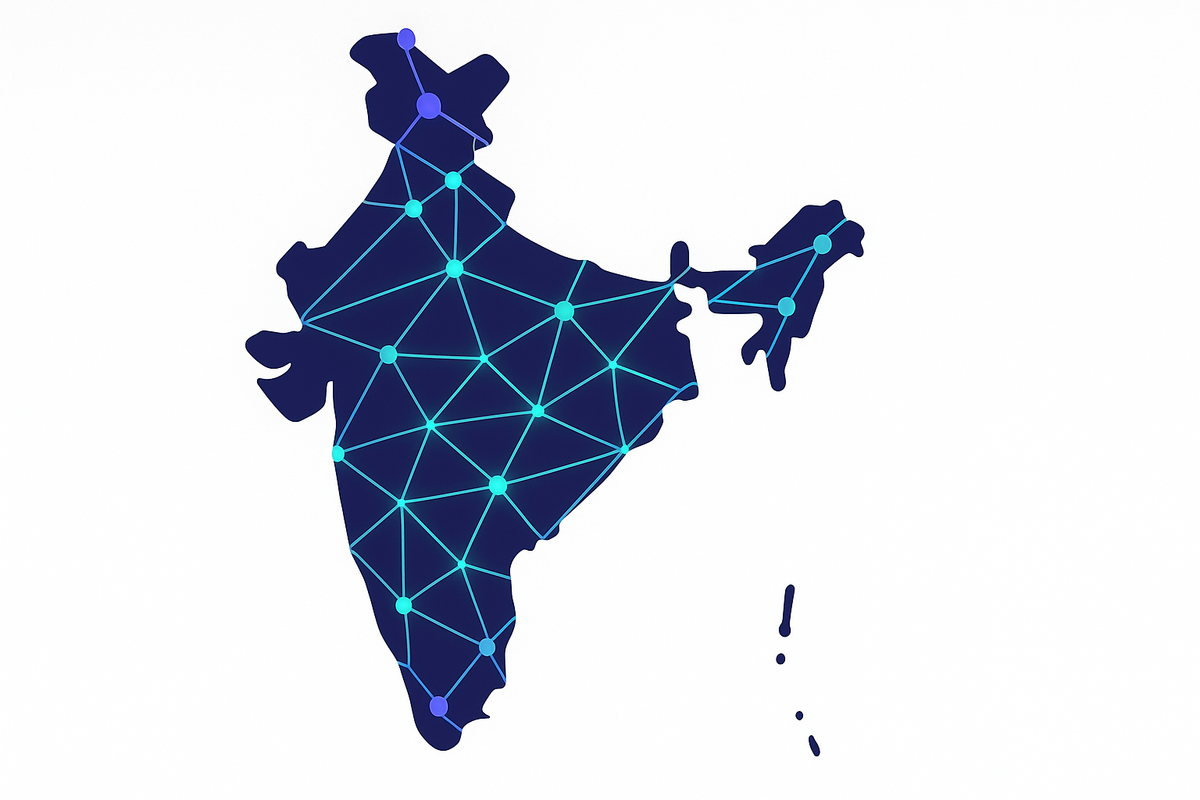
India is the world's fifth-largest economy by GDP and one of the fastest-growing B2B trade markets on the planet. With a manufacturing sector being supercharged by government initiatives like "Make in India" and a rapidly expanding digital commerce infrastructure, the opportunity for international suppliers and exporters to sell into this market has never been greater.
But country risk in India is layered and complex. Payment culture varies by region and industry. Legal enforcement of unpaid invoices is improving but still slow. Corporate transparency ranges from world-class among publicly listed companies to nearly opaque among small and medium enterprises. For finance teams extending trade credit to Indian buyers, understanding these dynamics isn't optional - it's the difference between profitable growth and mounting bad debt.
This guide breaks down country risk India B2B trade across the dimensions that matter most: the regulatory landscape, payment culture, common risks, and practical mitigation strategies that protect your receivables without killing the deal.
India's B2B Trade Landscape: What You Need to Know
India's GDP exceeded $3.5 trillion in 2025, with projections putting it on track to become the third-largest economy globally within the decade. The country's B2B trade is driven by several sectors that are particularly active in cross-border purchasing:
- Pharmaceuticals and chemicals - India is the world's largest producer of generic drugs and a major chemical importer
- Automotive and auto parts - a massive manufacturing base with deep supply chain dependencies on imported components
- Electronics and IT hardware - rapid growth driven by domestic consumption and government digitization programs
- Textiles and apparel - traditional strength with extensive international sourcing
- Industrial machinery and equipment - growing demand as manufacturing capacity expands
For exporters in these sectors, India offers volume that's hard to find elsewhere. But volume without proper buyer risk assessment is a recipe for receivables problems.
Legal and Regulatory Landscape
India's legal framework for commercial disputes has undergone significant modernization, but the practical experience of enforcing a debt still falls short of what Western sellers are accustomed to.
Contract Enforcement
India's commercial courts, established under the Commercial Courts Act of 2015, were designed to fast-track business disputes. In practice, even "fast-tracked" cases can take 1-3 years in major cities like Mumbai, Delhi, and Bangalore. Outside these metro areas, timelines stretch further.
The Insolvency and Bankruptcy Code (IBC) of 2016 was a watershed reform. It created a time-bound process for resolving corporate insolvency - nominally 180 days, extendable to 330 days. Before the IBC, resolving a corporate bankruptcy could take a decade. While the IBC has dramatically improved outcomes for large creditors, smaller trade creditors often find themselves at the bottom of the priority stack.
Regulatory Considerations
- Foreign Exchange Management Act (FEMA) governs all cross-border payments. Indian buyers must comply with RBI (Reserve Bank of India) regulations when remitting funds abroad, which can create processing delays
- GST (Goods and Services Tax) - India's unified tax system simplifies compliance but requires proper documentation. Mismatches in GST invoicing can delay payment
- Import licensing - certain goods require import licenses or are subject to restrictions. Always verify that your buyer has the necessary import authorizations before extending credit
- Anti-dumping duties - India actively uses anti-dumping measures, which can affect pricing and buyer willingness to honor contracted prices
Arbitration
India is a signatory to the New York Convention, meaning foreign arbitral awards are enforceable. However, Indian courts have historically been interventionist in arbitration matters. The Arbitration and Conciliation Act (amended in 2019) has improved the framework, and choosing an international arbitration seat (Singapore, London, or Hong Kong) while specifying Indian law as governing law is a common approach.
Payment Culture in India
Understanding Indian payment culture is critical for setting realistic expectations and identifying warning signs early.
Standard Payment Terms
Net 30 to Net 60 is the norm for B2B transactions in India, depending on the industry. In competitive sectors like textiles and auto parts, buyers will push for Net 90 or even Net 120. The willingness to accept extended terms is often a condition for winning the business in the first place.
Late Payment Reality
Late payment is deeply embedded in Indian business culture, particularly among smaller and mid-sized companies. Average DSO (days sales outstanding) for B2B transactions in India runs approximately 15-40 days beyond agreed terms. This doesn't necessarily indicate financial distress - it's often a reflection of how cash flow management works in practice.
However, this makes it harder to distinguish between a buyer who is "normally late" and one who is sliding toward default. Continuous buyer monitoring becomes essential rather than optional in this environment.
Negotiation Style
Indian buyers are skilled and assertive negotiators. Expect pushback on payment terms, pricing, quality standards, and credit limits. This is not adversarial - it's how business is conducted. Building trust through consistent engagement and demonstrating flexibility on minor points while holding firm on critical credit terms is the path to successful long-term relationships.
Relationship Dynamics
Personal relationships matter enormously in Indian business culture. A buyer who feels respected and valued as a partner is far more likely to prioritize your invoices. Conversely, purely transactional relationships with no personal connection often experience higher delinquency rates.
Want real-time visibility into your Indian buyers' payment behavior? BuyersIntelligence.ai provides continuous risk monitoring that goes beyond static credit reports - tracking financial health, legal proceedings, and payment patterns so you can extend credit with confidence.
Common Country Risk Factors in India
1. Corporate Transparency Gap
India has a dual-track economy when it comes to financial transparency. Publicly listed companies on the BSE and NSE are required to file audited financials quarterly and annually, providing reasonable visibility into their financial health. However, private limited companies - which make up the vast majority of B2B buyers - have far less stringent disclosure requirements.
While private companies must file with the Ministry of Corporate Affairs (MCA), the quality and timeliness of these filings varies widely. A business credit check on a mid-sized Indian private company may return thin or outdated data.
2. Currency and Transfer Risk
The Indian rupee (INR) is a managed float currency. While it's not subject to the extreme volatility seen in some emerging markets, it has depreciated consistently against the USD over the long term (roughly 3-5% annually). For sellers with INR-denominated receivables, this creates a slow but steady erosion of value.
Capital controls are not as restrictive as in some Asian markets, but RBI regulations mean that outward remittances must follow specific procedures. Delays of 5-15 business days for cross-border payments are common, even when the buyer has already initiated the transfer.
3. Regional Variation
India is effectively a continent-sized market with enormous regional differences. Business practices in Mumbai differ from those in Chennai, which differ from those in Ahmedabad. Payment culture, legal enforcement efficiency, and industry concentration all vary by state and city.
- Mumbai and Delhi NCR - most sophisticated, highest transparency, best legal infrastructure
- Bangalore and Hyderabad - strong in technology and pharma, generally reliable payers
- Gujarat (Ahmedabad, Surat) - major trading hub with a strong merchant culture, but heavier reliance on informal business practices
- Southern India (Chennai, Kochi) - growing manufacturing base, moderate transparency
- Smaller cities and towns - significantly higher risk due to limited financial data and weaker legal enforcement
4. Complex Corporate Structures
Indian business groups often operate through intricate webs of related companies, subsidiaries, and partnerships. A buyer may present themselves as part of a large group, but the specific entity you're contracting with may have minimal assets. Verifying the exact legal entity, its capitalization, and its relationship to the parent group is essential due diligence.
5. Sector-Specific Risks
- Retail and consumer goods - high rate of business formation and failure, thin margins
- Construction and infrastructure - project-based cash flows create lumpy payment patterns and high dependency on government payments
- Agriculture and commodities - seasonal cash flows and price volatility
- Pharmaceuticals - generally reliable payers but subject to regulatory price controls that can squeeze margins unexpectedly
Risk Mitigation Strategies for Selling on Credit to India
Start Conservative and Scale
For new Indian buyers, begin with proforma or cash-against-documents terms for the first 2-3 transactions. Move to Net 30 only after demonstrating payment reliability. Extend to Net 60 or beyond only for proven buyers with verified financials. This graduated approach is standard practice and well-understood by Indian buyers.
Verify Before You Extend
Before offering credit terms, conduct thorough KYB verification:
- MCA registration check - verify the company's incorporation status, authorized capital, and director information through the Ministry of Corporate Affairs
- GST registration verification - confirm active GST registration, which indicates a legitimate operating business
- Bank references - request references from the buyer's primary bank. Major Indian banks (SBI, HDFC, ICICI, Axis) provide commercial references
- Trade references - speak with other international suppliers who have extended credit to the same buyer
- Site verification - for larger credit exposures, physical verification of the buyer's operations is worth the investment
Use Appropriate Payment Instruments
- Letters of credit (LCs) - still widely used in Indian trade, particularly for first-time transactions. Indian banks have deep experience with LCs
- Documentary collections - a middle ground between open account and LCs, offering some protection at lower cost
- Bank guarantees - available from major Indian banks for creditworthy buyers
- Trade credit insurance - several global insurers (Euler Hermes, Coface, Atradius) have significant Indian operations and can provide single-buyer or portfolio coverage
Implement Continuous Monitoring
Given the dynamic nature of India's business environment, point-in-time credit assessments quickly become stale. Automated buyer monitoring that tracks financial filings, legal proceedings, payment behavior patterns, and news signals gives you early warning of deteriorating creditworthiness.
Structure Your Contracts Carefully
- Include an international arbitration clause with a seat outside India (Singapore is the most common choice for India-related disputes)
- Specify the governing law clearly - Indian law or the law of your jurisdiction, depending on your negotiating position
- Include retention of title clauses where applicable
- Define payment terms explicitly, including late payment interest rates and the currency of payment
- Add force majeure provisions that address India-specific risks (monsoon disruptions, regulatory changes)
Set Credit Limits Methodically
Use a structured approach to setting credit limits that factors in:
- The buyer's verified financial capacity (not just their order requests)
- Your country risk tier for India (typically Medium-High for most buyers)
- Industry-specific risk adjustments
- The buyer's payment track record with you and other suppliers
- Your portfolio concentration - don't let Indian receivables exceed your risk appetite as a percentage of total AR
Key Metrics to Watch
When monitoring your Indian buyer portfolio, track these indicators at both the individual buyer and portfolio level:
- DSO drift - If a buyer's payment timing is extending beyond their historical norm, it's an early warning signal. Don't dismiss it as "just Indian payment culture"
- MCA filing timeliness - Late filings with the Ministry of Corporate Affairs often correlate with financial distress
- GST compliance status - A suspended or cancelled GST registration is a serious red flag
- INR/USD exchange rate trends - Sustained rupee depreciation increases the real cost of paying USD-denominated invoices for your buyers
- Industry PMI data - India's Purchasing Managers' Index data, published monthly, gives leading indicators for sector-level activity
- RBI policy rate changes - Interest rate hikes increase borrowing costs for Indian businesses, potentially squeezing their cash flow and affecting payment behavior
Building a Sustainable India Credit Strategy
India is not a market you can afford to ignore, but it's also not a market where you can extend credit on autopilot. The most successful exporters selling on credit to Indian buyers share a common approach:
- They invest in understanding their buyers at a granular level rather than applying blanket country risk discounts
- They use technology to compensate for the transparency gap, deploying AI-powered buyer intelligence to fill in what traditional credit reports miss
- They build genuine relationships with their Indian buyers while maintaining disciplined credit processes
- They start small, prove the model, and scale methodically
Country risk India B2B trade is real and meaningful, but it's manageable with the right framework. The finance teams that build proper processes now will be positioned to capture one of the largest B2B growth opportunities of the next decade.
Ready to extend credit to Indian buyers with confidence? BuyersIntelligence.ai combines real-time financial monitoring, payment behavior tracking, and legal intelligence to give you a complete picture of buyer risk in India and beyond. Start your free assessment today.
Stop guessing about buyer risk. Get instant buyer intelligence.
Try BuyersIntelligence.ai - Free →