Letter of Credit vs Open Account: How to Choose Payment Terms for International B2B Trade
Letter of credit vs open account: a practical breakdown of costs, risks, and decision criteria for B2B exporters choosing how to get paid on international trade.
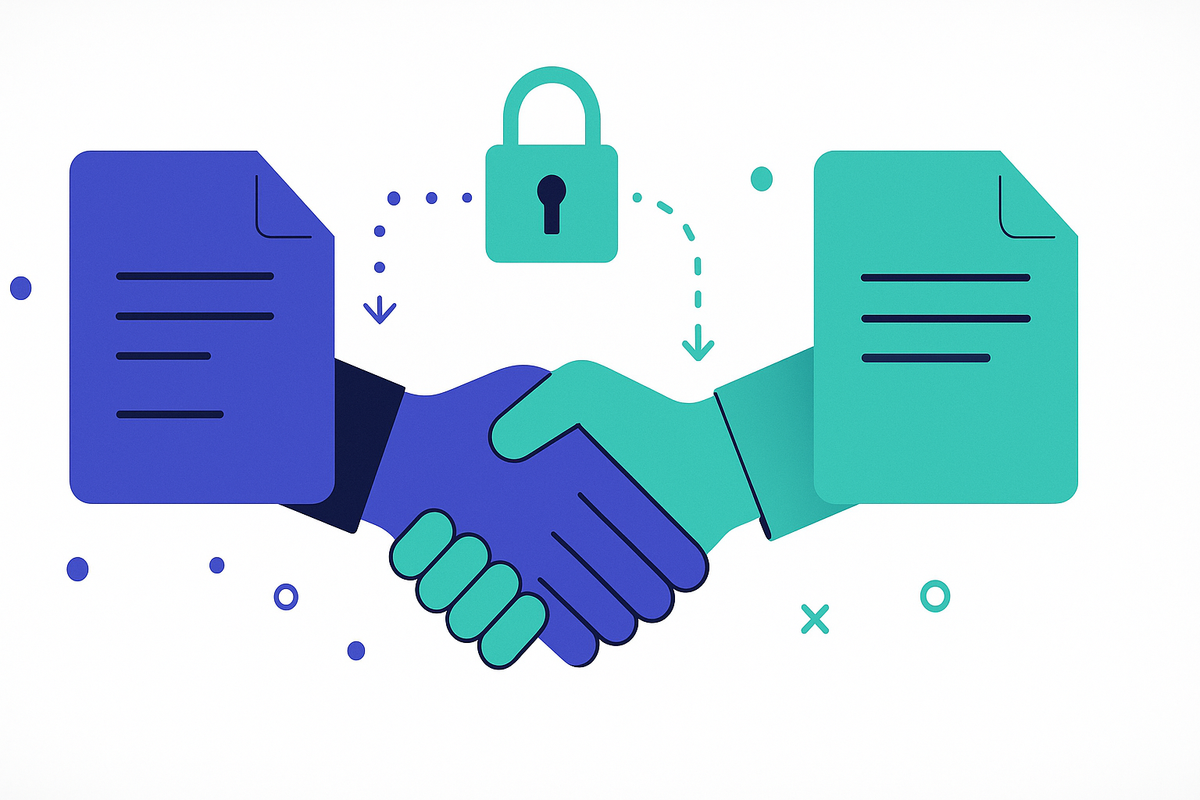
Every exporter eventually hits the same negotiation: the buyer wants open account terms, and finance wants the security of a letter of credit. The decision between letter of credit vs open account isn't just a paperwork preference - it determines who bears the risk if something goes wrong, how much the transaction costs both sides, and how fast the deal actually closes.
Get this decision wrong in one direction and you tie up working capital in expensive documentary formalities that slow down good buyers. Get it wrong in the other direction and you extend unsecured credit to a buyer you barely know, with no bank standing behind the payment.
This guide breaks down how letters of credit and open account terms actually work, what they cost, and how finance teams decide which one - or which blend of the two - fits a given buyer relationship.
What Is a Letter of Credit?
A letter of credit (LC) is a payment guarantee issued by the buyer's bank (the issuing bank) on the buyer's behalf, promising to pay the seller (the beneficiary) once specific documented conditions are met - typically proof that goods were shipped as agreed.
The mechanics work like this:
- The buyer applies for an LC through their bank, which assesses the buyer's creditworthiness and often requires collateral or a credit line
- The issuing bank sends the LC to the seller's bank (the advising or confirming bank)
- The seller ships the goods and submits the required documents - commercial invoice, bill of lading, packing list, certificate of origin, insurance certificate, and others as specified
- If the documents match the LC's terms exactly, the bank pays the seller, regardless of whether the buyer is satisfied with the goods
That last point matters enormously. An LC shifts payment risk from the buyer's willingness and ability to pay to the buyer's bank's obligation to pay against compliant documents. This is why LCs are considered one of the most secure payment instruments in international trade - the seller is no longer relying on buyer risk assessment alone. A bank with real capital and regulatory oversight stands behind the payment.
Types of Letters of Credit
Not all LCs offer the same level of protection:
- Confirmed LC - a second bank (usually in the seller's country) adds its own guarantee on top of the issuing bank's, protecting the seller even if the issuing bank or the buyer's country faces a banking crisis or capital controls
- Unconfirmed LC - only the issuing bank's guarantee applies. If that bank fails or the buyer's country restricts foreign currency transfers, the seller has no additional layer of protection
- Irrevocable LC - cannot be changed or cancelled without agreement from all parties; this is the standard for trade finance
- Standby LC - functions more like a guarantee than a primary payment method, used as a backup if the buyer fails to pay through agreed terms
- Revolving LC - covers multiple shipments under a single facility, useful for ongoing supply relationships rather than one-off transactions
For higher country risk situations - a topic covered in depth in our country risk guides - a confirmed LC is worth the extra cost. It insulates the seller from both buyer-level and country-level payment failure.
What Is Open Account Trading?
Open account is the mirror image of an LC. The seller ships the goods and invoices the buyer, who pays according to agreed payment terms - net 30, net 60, net 90 - with no bank guarantee in between. The seller extends credit directly to the buyer, exactly as they would with a domestic customer.
Open account has become the dominant method in global B2B trade - by some industry estimates, more than 80% of international trade now happens on open account terms. Buyers prefer it because it improves their own cash flow and avoids the cost and paperwork burden of documentary credit. Sellers offer it because refusing to do so often means losing the deal to a competitor who will.
But open account shifts 100% of the payment risk onto the seller. There's no bank standing behind the transaction. If the buyer defaults, disputes the invoice, or the buyer's country imposes currency controls that block the transfer, the seller absorbs the loss directly. This is precisely why continuous buyer monitoring and rigorous upfront due diligence matter so much more when trading on open account than when an LC is in place.
Letter of Credit vs Open Account: The Real Cost Comparison
Cost is where the letter of credit vs open account decision often gets made in practice, even when risk considerations point the other way.
Cost of a Letter of Credit
LCs are not cheap, and the costs fall on both parties:
- Issuance fees - the buyer typically pays 0.5% to 2% of the transaction value to their bank to issue the LC, sometimes with additional collateral requirements that tie up the buyer's credit line
- Confirmation fees - if a confirmed LC is used, the seller's bank charges an additional fee, often 0.25% to 1.5%, higher in markets perceived as higher country risk
- Document handling and amendment fees - discrepancies in documents (a wrong date, a missing certificate) trigger amendment fees and delays; document discrepancies are extremely common and can add days or weeks to payment
- Time cost - LC transactions typically take longer to close than open account deals, since document preparation, bank review, and correction cycles all add time before funds are released
For a buyer, an LC also consumes a chunk of their bank credit facility. A buyer with limited banking relationships or a smaller credit line may simply be unable to get an LC issued for the size of order they want to place - which is why many buyers push hard for open account instead.
Cost of Open Account
Open account looks cheap on the surface - no bank fees, no documentary requirements, faster transaction cycles. But the real cost shows up elsewhere:
- Bad debt exposure - if a buyer defaults, the seller absorbs the full loss with no bank recourse
- Working capital tied up in receivables - extending net 30/60/90 terms means the seller is effectively financing the buyer's purchase, which has a real cost of capital
- Cost of credit risk management - proper open account trading requires ongoing buyer verification, monitoring, and collections infrastructure that LC-based trade doesn't need
- Insurance or factoring costs - many sellers mitigate open account risk with trade credit insurance or accounts receivable factoring, both of which carry their own premiums or discount fees
The honest comparison isn't "LC costs money, open account is free." It's "LC costs are visible and paid upfront; open account costs are invisible and paid later, sometimes all at once when a buyer defaults."
Want to trade on open account terms with confidence instead of guesswork? BuyersIntelligence.ai gives you real-time buyer risk scoring so you know exactly which buyers can safely move off LCs and onto open account - and which ones still need the bank's guarantee behind them.
When to Use a Letter of Credit
LCs make the most sense in specific situations:
New buyer relationships in higher-risk markets. When you have no payment history with a buyer and limited visibility into their financial health - particularly in markets with weaker corporate transparency or enforcement, as detailed in our guides on selling to Southeast Asia and Latin America - an LC removes the guesswork.
Large transaction values relative to your risk appetite. A single order that would represent an outsized share of your receivables portfolio justifies the extra cost and time of an LC.
Country or currency risk is elevated. Capital controls, currency instability, or political uncertainty in the buyer's country make transfer risk a real concern, independent of the buyer's own creditworthiness. A confirmed LC addresses this directly.
Industries with structurally high risk. Commodities, capital equipment, and other sectors with large ticket sizes and long production cycles often use LCs as standard practice regardless of buyer size.
Regulatory or compliance requirements. Some jurisdictions or industries require LCs for specific transaction types, particularly involving export controls or sanctioned-adjacent goods.
When to Use Open Account
Open account is the better fit when:
You have an established, verified payment history with the buyer. Once a buyer has demonstrated reliable payment over several transactions, the friction and cost of an LC often outweighs the marginal risk reduction.
The buyer has strong, verifiable financials. Publicly listed companies, or private companies with transparent financials and strong credit scores, don't need a bank guarantee to prove they can pay.
Speed and relationship matter more than absolute security. Competitive markets often go to the seller willing to offer open account terms. If your buyer verification process is strong, you can compete on terms without taking on unmanaged risk.
You have credit insurance or factoring in place. These tools can replicate some of the risk protection of an LC while preserving the speed and simplicity of open account trading.
Transaction sizes are modest relative to your risk capacity. Smaller, recurring orders are easier to absorb if something goes wrong, making the LC's cost harder to justify.
A Graduated Approach: Moving Buyers From LC to Open Account
The most sophisticated exporters don't treat this as a binary, permanent choice. They use a graduated framework:
- First transactions - require an LC (or cash in advance for very new or small buyers) regardless of how strong the buyer looks on paper. There's no substitute for actual payment history.
- After 2-3 clean LC transactions - consider a documentary collection (a middle-ground instrument that offers some protection without full LC costs) as a bridge step.
- After 6-12 months of consistent, on-time payment - transition to open account with conservative payment terms and a modest credit limit.
- As the relationship matures - extend terms and credit limits gradually, tied to demonstrated payment behavior and ongoing monitoring, not just tenure.
This approach lets you capture the speed and cost benefits of open account while still requiring buyers to earn that trust. It also gives you an objective, defensible basis for the decision - useful both internally for credit policy consistency and externally when a buyer pushes back on terms.
The Role of Buyer Intelligence in This Decision
The traditional way to decide between letter of credit vs open account was largely based on gut feel, country reputation, and whatever credit report happened to be available at the time - often outdated by the time a decision was needed.
Modern buyer intelligence changes the calculus. Instead of defaulting to "new international buyer = LC, no exceptions," finance teams can make faster, more accurate decisions using real-time data:
- Financial health signals that update continuously rather than relying on a credit report pulled six months ago
- Payment behavior patterns aggregated across the buyer's history with other suppliers, not just the references they hand-picked for you
- Compliance and legitimacy checks - KYB verification, sanctions screening, and adverse media monitoring - that flag risk before you extend any terms at all
- Country risk context layered on top of buyer-specific data, so you're not treating every buyer in a given country the same way
This doesn't eliminate the need for LCs entirely - some situations genuinely call for a bank's guarantee. But it means the decision can be based on the specific buyer in front of you rather than a blanket policy driven by fear of the unknown.
The Bottom Line
Letter of credit vs open account isn't a question with one right answer. It's a risk allocation decision that should be driven by what you actually know about the buyer, the country, and the transaction - not by habit or by whichever option feels safer in the moment.
LCs earn their cost when you're facing a new buyer, an unfamiliar country, or a transaction size that would hurt if it went wrong. Open account earns its speed and simplicity when you've verified the buyer, understand their payment behavior, and have the monitoring in place to catch problems early rather than after the invoice is 90 days overdue.
The finance teams that get this right aren't choosing one instrument forever - they're building a graduated system that starts conservative, uses real buyer data to move faster with proven buyers, and reserves the bank's guarantee for the situations that genuinely need it.
BuyersIntelligence.ai gives B2B finance teams the real-time buyer risk data needed to make this call with confidence - so you can move buyers to open account when they've earned it, and keep the LC in place when they haven't. Try it free.
Stop guessing about buyer risk. Get instant buyer intelligence.
Try BuyersIntelligence.ai - Free →