Continuous Buyer Monitoring: Why Annual Reviews Are Dead
Annual buyer reviews miss 90% of risk signals. Learn why continuous buyer monitoring is replacing outdated periodic reviews - and how to implement it without drowning your team.
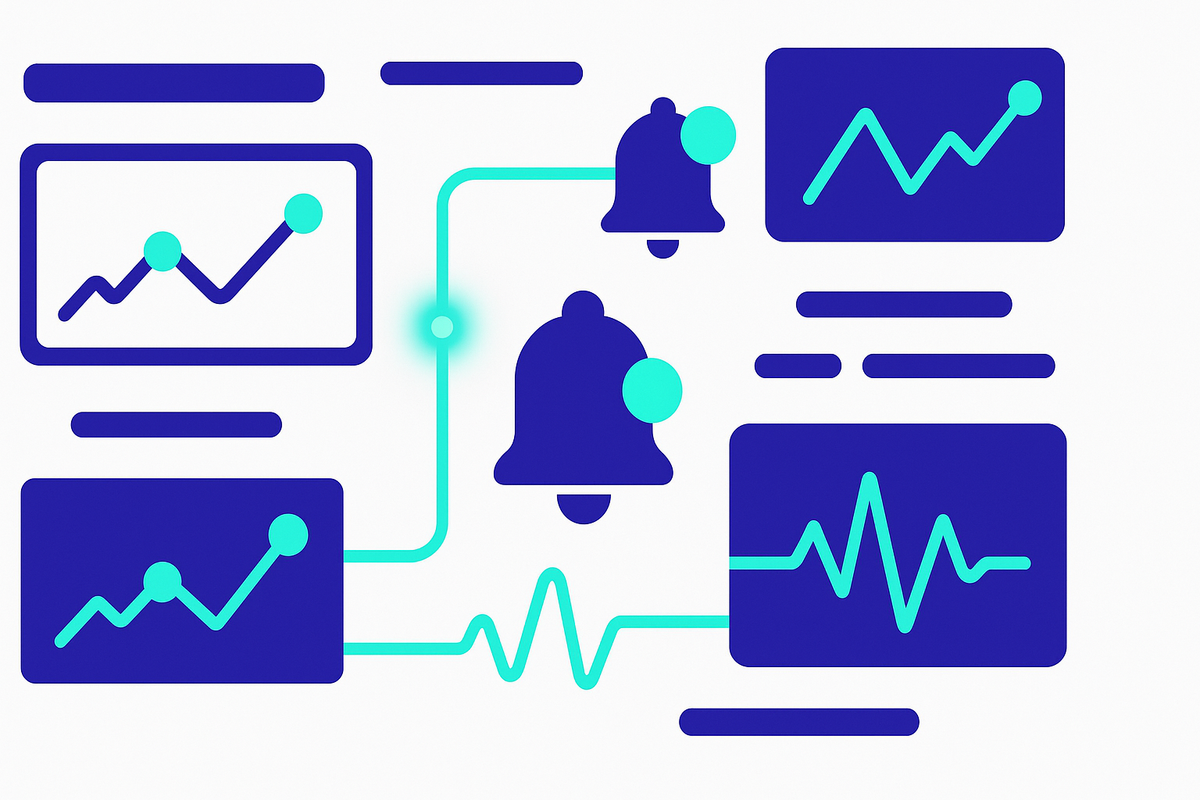
Continuous Buyer Monitoring: Why Annual Reviews Are Dead
Your biggest buyer could be filing for bankruptcy right now. If you only review buyer risk once a year, you won't find out until the invoice goes unpaid.
Annual buyer reviews were built for a slower world - one where financial data changed gradually and business failures took years to unfold. That world is gone. Today, a buyer's risk profile can shift dramatically in weeks. Supply chain disruptions, currency collapses, regulatory changes, and sudden market downturns don't wait for your next scheduled review.
This is why continuous buyer monitoring is rapidly replacing the traditional annual review cycle. And the companies that make the switch are catching risk signals months before their competitors.
What Is Continuous Buyer Monitoring?
Continuous buyer monitoring is the practice of tracking your B2B buyers' financial health, payment behavior, and risk indicators on an ongoing basis - not just once a year or when something goes wrong.
Instead of pulling a credit report every 12 months and hoping nothing changed, continuous monitoring systems watch for changes in real time and alert you when something needs attention.
This includes tracking:
- Financial filings and credit score changes - deteriorating financials show up in public records, credit bureau updates, and regulatory filings
- Payment behavior patterns - a buyer who starts paying 5 days later each month is sending a signal
- Legal and regulatory events - lawsuits, liens, judgments, sanctions, and compliance actions
- Ownership and management changes - new leadership or ownership shifts can change a company's risk profile overnight
- News and market signals - layoffs, funding problems, major customer losses, and industry downturns
- Trade references and supplier feedback - if other suppliers are tightening terms, you should know
The goal isn't to drown your team in alerts. It's to surface the signals that matter, when they matter, so you can act before a problem becomes a loss.
Why Annual Reviews Fail
The annual review model has a fundamental flaw: it assumes buyer risk is static between review dates. Here's why that assumption is dangerous.
The 364-Day Blind Spot
If you review a buyer on January 1st and their financial situation deteriorates on January 2nd, you won't know until the following January. That's 364 days of extending credit to a buyer whose risk profile has materially changed.
In practice, most companies don't even hit their annual review targets. Finance teams are busy. Reviews get pushed back. A 12-month cycle becomes 15 months, then 18. The blind spot grows wider.
Risk Moves Faster Than Review Cycles
Consider what can happen in a single quarter:
- A major buyer loses their largest customer (revenue drops 30%)
- Currency devaluation in their home market erodes their purchasing power
- A key executive leaves and takes institutional knowledge with them
- Their primary lender tightens credit lines
- A competitor enters their market with aggressive pricing
Any one of these events could turn a low-risk buyer into a high-risk one. If your review cycle doesn't catch it, your accounts receivable becomes the early warning system - and by then, the money is already out the door.
The Portfolio Scale Problem
Annual reviews might work when you have 20 buyers. When you have 200 or 2,000, the math breaks down.
A thorough buyer review takes 2-4 hours of analyst time. For a portfolio of 500 buyers, that's 1,000-2,000 hours per year - essentially a full-time analyst doing nothing but reviews. Most companies don't have that capacity, so they triage: review the top 20% and hope the rest are fine.
That's a gamble. Mid-tier buyers who slip through the cracks can deliver losses just as painful as a major account default.
The Real Cost of Periodic Reviews
Companies that rely on annual or semi-annual buyer reviews consistently underestimate the cost. The direct losses from missed risk signals are obvious - an unexpected default on a $200,000 invoice hurts. But the indirect costs are often larger.
Missed Early Warning Signs
When a buyer starts struggling financially, they don't default overnight. There's usually a progression:
- Payment days start creeping up (Net 30 becomes Net 45, then Net 60)
- Order volumes drop or become erratic
- They start requesting extended terms or payment plans
- Communication becomes harder - slower responses, missed calls
- Finally, the default
With continuous monitoring, you catch this at stage 1 or 2. With annual reviews, you might not notice until stage 4 or 5, when your exposure is at its peak.
Overly Conservative Credit Limits
Here's the counterintuitive cost: without real-time visibility, credit teams default to conservative limits to manage uncertainty. If you can't see what's happening between reviews, the rational move is to assume the worst.
This means good buyers get lower credit limits than they deserve. They buy less from you and more from competitors who offer better terms. You lose revenue not because of bad buyers, but because you can't tell the good ones from the bad ones in real time.
Compliance and Audit Risk
Regulations like KYB (Know Your Business) requirements are tightening globally. "We review annually" is increasingly insufficient for compliance. Regulators want to see that you have ongoing processes, not just periodic snapshots.
How Continuous Buyer Monitoring Works in Practice
Implementing continuous monitoring doesn't mean hiring an army of analysts to watch dashboards all day. Modern buyer monitoring combines automated data collection, risk scoring, and alert-based workflows.
Automated Data Aggregation
The foundation is connecting to multiple data sources that update continuously:
- Credit bureaus - automated pulls when scores change (not on a schedule)
- Public records - court filings, UCC filings, tax liens, judgments
- Corporate registries - ownership changes, director appointments, address changes
- News monitoring - filtered for financial distress signals, M&A activity, regulatory actions
- Payment data - your own AR aging data, analyzed for trend changes
- Trade credit networks - anonymized payment behavior data from other suppliers
No single source tells the whole story. The power of continuous monitoring comes from combining these signals.
Risk Score Recalculation
Rather than a static credit score that updates annually, continuous monitoring recalculates buyer risk scores whenever new data arrives. A change in any input triggers a rescore.
This is where AI-powered credit scoring adds serious value. Machine learning models can weigh hundreds of variables simultaneously and detect patterns that human analysts would miss - like the combination of a slight payment slowdown plus a news article about industry headwinds plus a change in corporate officers that together signal elevated risk.
Alert-Based Workflows
Continuous monitoring generates alerts, not reports. Your team doesn't need to review every buyer every day. They need to know when something changes that requires action.
Effective alert systems tier events by severity:
- Critical - credit score drops below threshold, legal judgment filed, bankruptcy proceeding
- Warning - payment trend deteriorating, ownership change, negative news signal
- Informational - minor score fluctuation, address change, new filing (no negative impact)
Critical alerts trigger immediate review. Warnings get queued for weekly assessment. Informational events get logged for context.
Want to see how continuous monitoring works in practice? BuyersIntelligence.ai monitors your buyer portfolio automatically and alerts you to risk changes as they happen - no manual tracking required.
Building a Continuous Monitoring Framework
If you're moving from annual reviews to continuous monitoring, here's a practical framework for the transition.
Step 1: Segment Your Portfolio by Exposure
Not every buyer needs the same level of monitoring. Start by segmenting:
- Tier 1 (High exposure) - top 10-20% of buyers by outstanding AR. These get the most granular monitoring with the lowest alert thresholds.
- Tier 2 (Medium exposure) - middle 30-40%. Standard monitoring with moderate alert thresholds.
- Tier 3 (Low exposure) - bottom 40-50%. Basic monitoring with high alert thresholds (only critical events).
This keeps alert volume manageable while ensuring your highest-risk exposures get the most attention.
Step 2: Define Your Data Sources
Map out what data you currently have access to and what gaps exist:
| Data Source | Update Frequency | Current Access? |
|---|---|---|
| Credit bureau scores | Event-driven | Usually yes |
| Your own AR aging data | Daily/weekly | Yes |
| Public court records | Event-driven | Often no |
| Corporate registry changes | Event-driven | Often no |
| News monitoring | Continuous | Usually no |
| Trade credit network data | Monthly | Rarely |
The gaps tell you where your blind spots are and which data sources to prioritize adding.
Step 3: Set Alert Thresholds
Define what constitutes a meaningful change for each data source. Too sensitive and your team drowns in noise. Too loose and you miss real signals.
Good starting thresholds:
- Credit score change of more than 10 points in 30 days
- Payment days trending more than 7 days slower over 3 consecutive invoices
- Any new legal filing (lawsuit, lien, judgment)
- Ownership change of more than 25% of equity
- Negative news from 2+ independent sources
Tune these based on your industry and risk tolerance. Review thresholds quarterly and adjust based on alert quality.
Step 4: Define Response Protocols
Alerts without action protocols are just noise. For each alert tier, define:
- Who gets notified (credit analyst, credit manager, CFO)
- Response time expectation (critical: same day, warning: within a week)
- Available actions (hold orders, reduce credit limit, request updated financials, add to watchlist)
- Escalation path (when does a warning become critical)
Document these protocols so your team doesn't have to make judgment calls under pressure.
Step 5: Integrate With Your Credit Decision Workflow
Continuous monitoring data should feed directly into your credit decision process. When a buyer applies for new credit or requests a limit increase, the decision should reflect the latest monitoring data - not last year's review.
This means connecting your monitoring system to your credit approval workflow, whether that's a formal credit management platform or a structured spreadsheet process.
Continuous Monitoring vs. Annual Reviews: A Comparison
| Aspect | Annual Reviews | Continuous Monitoring |
|---|---|---|
| Detection speed | 6-12 months delayed | Hours to days |
| Analyst time per buyer | 2-4 hours/year | Minutes (alert-based) |
| Portfolio coverage | 20-30% thoroughly reviewed | 100% monitored |
| Data freshness | Point-in-time snapshot | Always current |
| Compliance readiness | Weak (periodic only) | Strong (ongoing process) |
| False sense of security | High | Low |
| Scalability | Poor (linear cost increase) | Good (marginal cost per buyer decreases) |
The scalability point is worth emphasizing. Annual reviews cost roughly the same per buyer regardless of portfolio size. Continuous monitoring has higher upfront cost but lower marginal cost - adding buyer #501 to an automated monitoring system costs almost nothing.
Common Objections (and Why They Don't Hold Up)
"We don't have the budget for monitoring tools"
What's the cost of one unexpected default? For most B2B companies, a single material default costs more than a year of monitoring tools. Frame it as insurance math: if monitoring prevents even one default per year, it pays for itself many times over.
Also consider the revenue upside. Better visibility into buyer health lets you extend higher credit limits to strong buyers with confidence, increasing sales without increasing risk.
"Our team is too small to handle alerts"
This is actually an argument for continuous monitoring, not against it. Small teams can't afford to spend hours on comprehensive annual reviews. Alert-based monitoring is less work, not more - it tells your team exactly where to focus.
A well-configured system might generate 5-10 meaningful alerts per week for a portfolio of 500 buyers. That's far less work than trying to review those buyers manually.
"Our buyers are all large, stable companies"
Large companies fail too. Enron was AAA-rated. Wirecard passed every compliance check. SVB collapsed in 48 hours. Size and stability are not immunity.
More importantly, "large and stable" is a description of the past. Continuous monitoring tells you whether that description still applies today.
"We already have credit insurance"
Credit insurance is valuable but has limitations. Policies have exclusions, coverage limits, and claims processes that can take months. Continuous monitoring helps you manage risk proactively instead of just insuring against it reactively.
The best approach combines both: insurance as a safety net plus monitoring for proactive risk management.
The Buyer Monitoring Technology Landscape
Several categories of tools support continuous buyer monitoring:
- Credit bureau monitoring services - Dun & Bradstreet, Experian, Equifax offer automated monitoring with alerts on score changes and new filings
- Trade credit networks - platforms that aggregate anonymized payment data from multiple suppliers
- News and media monitoring - tools that scan for company mentions with financial distress signals
- All-in-one buyer intelligence platforms - tools like BuyersIntelligence.ai that combine multiple data sources into a single monitoring dashboard with integrated alerts and risk scoring
When evaluating tools, prioritize:
- Data source breadth - more sources means fewer blind spots
- Alert configurability - you need control over thresholds and routing
- Integration capabilities - the tool should connect to your existing credit workflow
- Scalability - cost per buyer should decrease as your portfolio grows
- Speed to insight - how quickly do new signals appear as alerts
Getting Started: The 30-Day Transition Plan
You don't need to overhaul everything at once. Here's a practical 30-day plan to move from annual reviews to continuous monitoring:
Week 1: Audit and segment - List all active buyers with current credit limits and outstanding AR - Segment into Tier 1/2/3 based on exposure - Identify your current data sources and gaps
Week 2: Set up automated monitoring for Tier 1 - Connect credit bureau monitoring for top 20% of buyers - Set up news alerts for these companies (Google Alerts as a free starting point) - Define alert thresholds and response protocols
Week 3: Expand to Tier 2 and test workflows - Add Tier 2 buyers to monitoring - Run a fire drill: simulate a critical alert and test your response process - Adjust thresholds based on initial alert volume
Week 4: Full deployment and baseline - Add remaining buyers to basic monitoring - Document your monitoring framework - Set calendar reminder for 90-day threshold review
Conclusion: The Shift Is Already Happening
The move from periodic to continuous buyer monitoring isn't a trend - it's a correction. The annual review model was always a compromise, limited by the cost and complexity of manual data collection. Now that technology has removed those barriers, there's no good reason to keep flying blind between reviews.
The companies that adopt continuous monitoring gain three things: earlier warning of problems, confidence to extend more credit to strong buyers, and a defensible compliance posture. The companies that don't will keep finding out about buyer problems the hard way - when the invoice goes unpaid.
Your AR portfolio is too important to review once a year and hope for the best. Start monitoring continuously, and you'll wonder how you ever managed without it.
Stop guessing about buyer risk. BuyersIntelligence.ai gives you continuous buyer monitoring with real-time alerts, automated risk scoring, and full portfolio visibility. Check any buyer's risk profile in 60 seconds - try it free.