How to Set Payment Terms That Protect Your Cash Flow
Learn how to set B2B payment terms that balance competitive offers with cash flow protection. Practical frameworks for Net 30, Net 60, and beyond.
Every B2B transaction starts with a negotiation most finance teams get wrong: payment terms.
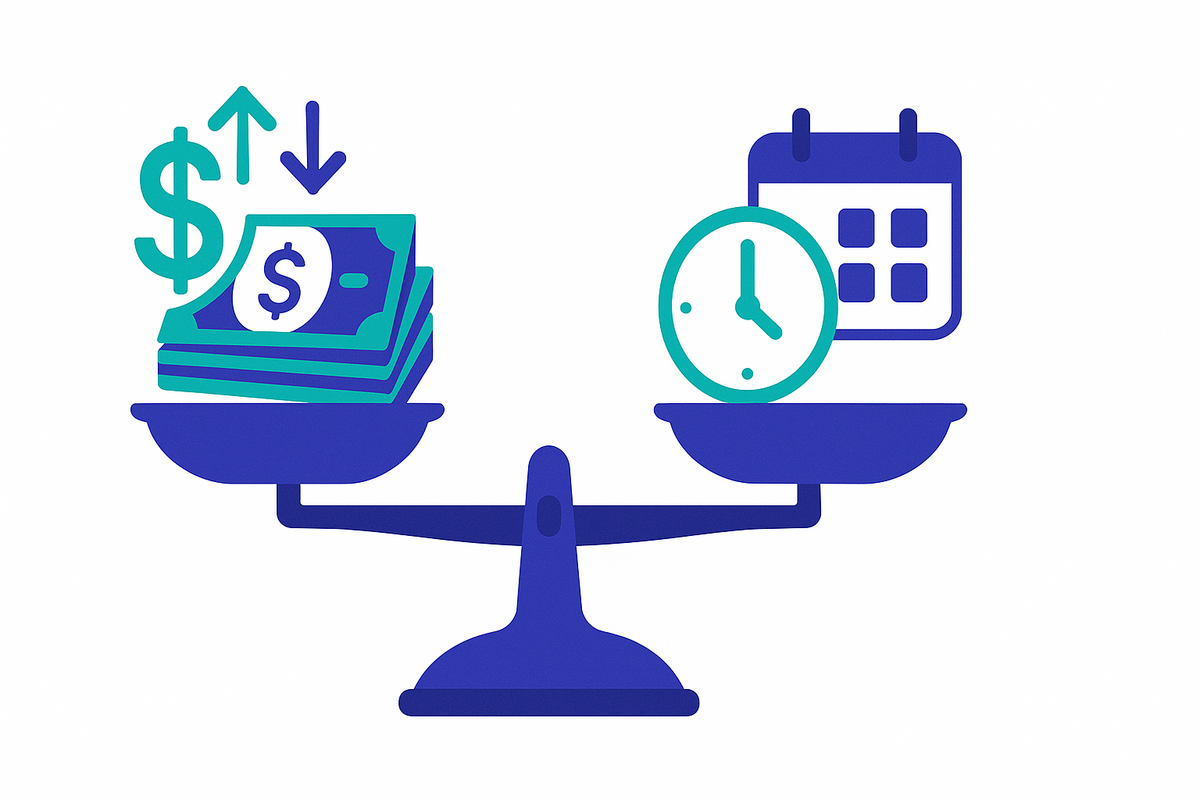
Offer terms that are too generous and you are essentially giving your buyers an interest-free loan - at your expense. Too restrictive, and you lose the deal to a competitor who is willing to take more risk.
The stakes are real. According to Atradius, 87% of B2B companies report that late payments directly impact their cash flow. And for growing businesses extending trade credit, one bad payment term decision can cascade into a liquidity crisis.
This guide breaks down how to set B2B payment terms that protect your cash flow without killing your competitive edge. No theory - just practical frameworks you can implement this week.
What Are B2B Payment Terms and Why Do They Matter?
B2B payment terms define when and how a buyer must pay for goods or services after delivery. The most common structures include:
- Net 30 - Payment due within 30 days of invoice
- Net 60 - Payment due within 60 days
- Net 90 - Payment due within 90 days
- 2/10 Net 30 - 2% discount if paid within 10 days, otherwise full payment in 30 days
- Cash on Delivery (COD) - Payment at the time of delivery
- Payment in Advance (PIA) - Payment before goods are shipped
Your payment terms are not just an administrative detail. They are a strategic lever that directly affects:
Cash flow timing. Net 60 terms on a $100,000 order means you are financing $100,000 for two months. Multiply that across your customer base and you could have millions tied up in receivables.
Customer acquisition. Buyers - especially larger ones - expect trade credit. If your competitors offer Net 60 and you demand payment upfront, you are at a disadvantage.
Bad debt exposure. The longer your payment terms, the more time a buyer has to encounter financial trouble before they pay you.
Working capital requirements. Extended terms mean you need more working capital to fund operations while waiting for payments to arrive.
The Real Cost of Getting B2B Payment Terms Wrong
Before diving into frameworks, let's quantify what bad payment terms actually cost.
The Cost of Terms That Are Too Generous
Imagine you sell $500,000/month in goods on Net 90 terms. At any given time, you have roughly $1.5 million in outstanding receivables. That is $1.5 million you cannot use to buy inventory, hire staff, or invest in growth.
The carrying cost alone - assuming you borrow at 8% to fund operations - is $120,000 per year. And that does not account for the buyers who pay late (turning Net 90 into Net 120+) or the ones who default entirely.
The Cost of Terms That Are Too Restrictive
On the flip side, demanding payment upfront or COD can cost you revenue. A survey by the Credit Research Foundation found that 62% of B2B buyers consider payment terms a deciding factor when choosing suppliers. In competitive markets, the supplier offering Net 60 beats the one demanding COD - even if the product is identical.
The Sweet Spot
The goal is not to minimize risk at all costs. It is to price risk correctly into your payment terms so that you are compensated for the credit you extend.
How to Evaluate a Buyer Before Setting B2B Payment Terms
The biggest mistake finance teams make is applying the same payment terms to every buyer. A Fortune 500 company with a pristine payment history is fundamentally different from a 2-year-old startup placing its first order.
Here is a practical framework for buyer evaluation:
1. Financial Health Assessment
Before extending credit, you need to understand the buyer's ability to pay:
- Revenue and profitability trends - Is the business growing or contracting?
- Debt-to-equity ratio - How leveraged are they?
- Current ratio - Can they cover short-term obligations?
- Cash flow from operations - Do they generate enough cash to pay suppliers?
Traditional credit reports from providers like Dun & Bradstreet or Experian give you a snapshot, but they are often 30-90 days old by the time you see them. For a real-time view, platforms like BuyersIntelligence.ai aggregate multiple data sources to give you an up-to-date risk profile in minutes rather than days.
2. Payment History Analysis
Past behavior is the best predictor of future behavior:
- Your own records - Has this buyer ordered from you before? Did they pay on time?
- Trade references - What do their other suppliers say about their payment habits?
- Industry payment indices - Some industries are chronically slow payers (construction, for example, averages 83 days to pay)
3. Business Stability Indicators
Look beyond the financials:
- Years in business - Startups carry more risk than established companies
- Customer concentration - If a buyer depends on one client for 80% of revenue, they are fragile
- Legal issues - Active lawsuits, liens, or judgments are red flags
- Country risk - International buyers add currency, political, and legal risk layers
For a deeper dive on evaluating buyer risk, see our Complete Guide to B2B Buyer Risk Assessment.
A Practical Framework for Setting B2B Payment Terms
Based on your buyer evaluation, slot each customer into a risk tier and assign payment terms accordingly.
Tier 1: Low Risk - Established, Financially Strong Buyers
Profile: 5+ years in business, strong financials, clean payment history, reputable industry player.
Recommended terms: Net 60, or even Net 90 for strategic accounts.
Why: These buyers are very likely to pay. Offering generous terms strengthens the relationship and increases order volume. The credit risk is minimal.
Additional considerations: - Offer early payment discounts (2/10 Net 60) to incentivize faster payment - Set credit limits based on their typical order volume (e.g., 2x average monthly order) - Review annually unless there is a material change
Tier 2: Medium Risk - Growing or New-to-You Buyers
Profile: 2-5 years in business, decent financials but limited history with you, moderate industry.
Recommended terms: Net 30, with potential to extend to Net 45 after 3-6 months of on-time payments.
Why: You want to build the relationship, but you are not ready to take on significant credit exposure. Net 30 is the industry standard and most buyers accept it without pushback.
Additional considerations: - Start with a lower credit limit (1x first order value) and increase over time - Require trade references before extending terms - Monitor payment patterns closely for the first 6 months
Tier 3: Higher Risk - New, Unproven, or Financially Weak Buyers
Profile: Less than 2 years old, limited financial data, poor credit indicators, or operating in a high-risk country.
Recommended terms: Cash on Delivery, Payment in Advance, or Net 15 with a credit limit cap.
Why: The risk of non-payment is too high to justify extended terms. If the buyer proves reliable, you can gradually extend more favorable terms.
Additional considerations: - Use buyer verification processes to confirm legitimacy before any transaction - Consider requiring a personal guarantee for small businesses - Offer a path to better terms (e.g., "Pay COD for 3 orders, then we will review for Net 30")
Tier 4: International Buyers - Additional Risk Layers
Profile: Any buyer outside your domestic market.
Recommended terms: Depends on the country risk profile, but generally start with more conservative terms.
- Low-risk countries (EU, UK, Australia, Japan): Same framework as domestic buyers
- Medium-risk countries (Mexico, Brazil, Southeast Asia): One tier more conservative than domestic equivalent
- High-risk countries: Payment in advance or letter of credit
For country-specific guidance, see our upcoming guides on selling on credit to Southeast Asia and Latin America.
Early Payment Discounts: A Cash Flow Accelerator
One of the most underused tools in B2B payment terms is the early payment discount. The most common structure is 2/10 Net 30 - meaning the buyer gets a 2% discount if they pay within 10 days, otherwise the full amount is due in 30 days.
Why Buyers Take the Discount
A 2% discount for paying 20 days early works out to an annualized return of about 36%. For buyers with available cash, that is a better return than almost any investment. Smart finance teams know this and will prioritize your invoices to capture the discount.
Why It Works for You
- Faster cash conversion - You get paid in 10 days instead of 30 (or more)
- Lower DSO - Days Sales Outstanding drops, improving your balance sheet
- Reduced risk - Less time for things to go wrong between invoice and payment
- Self-selection - Financially healthy buyers are most likely to take the discount, naturally sorting your receivables by risk
How to Structure Early Payment Discounts
| Structure | Discount | If Paid Within | Otherwise Due |
|---|---|---|---|
| 2/10 Net 30 | 2% | 10 days | 30 days |
| 1/10 Net 60 | 1% | 10 days | 60 days |
| 3/15 Net 45 | 3% | 15 days | 45 days |
Pro tip: Run the math on your cost of capital before setting discount rates. If you are paying 10% interest on a line of credit, a 2% discount to get paid 20-50 days faster is almost always worth it.
Dynamic Payment Terms: The Modern Approach
Static payment terms - the same terms for every order, reviewed once a year - are becoming obsolete. Forward-thinking finance teams are moving to dynamic payment terms that adjust based on real-time risk data.
How Dynamic Payment Terms Work
Instead of assigning fixed terms at account setup, you continuously evaluate each buyer and adjust terms based on:
- Payment behavior trends - A buyer who has been paying progressively later gets tighter terms
- Financial health changes - If a buyer's credit score drops, terms tighten automatically
- Order size relative to credit limit - A $10,000 order from a buyer with a $50,000 limit gets standard terms; a $48,000 order triggers additional review
- Market conditions - During economic downturns, you might tighten terms across the board
Implementing Dynamic Terms
You do not need enterprise software to start. Here is a simple approach:
- Set baseline terms using the tier framework above
- Track payment patterns in your ERP or accounting system
- Flag deviations - If a Tier 1 buyer starts paying 15+ days late, investigate and potentially downgrade
- Review quarterly - Reassess each buyer's tier and adjust terms
Want to automate this? BuyersIntelligence.ai provides continuous buyer monitoring that flags risk changes in real time - so you can adjust terms before a problem becomes a loss. Check out our post on why continuous buyer monitoring is replacing annual reviews.
Negotiating B2B Payment Terms Without Losing Deals
Buyers always want longer terms. Here is how to negotiate without caving:
Strategy 1: Anchor High, Then Concede
Start with terms one tier tighter than you are willing to accept. If you are comfortable with Net 30, open with Net 15 or COD. When the buyer pushes back, "conceding" to Net 30 feels like a win for them.
Strategy 2: Trade Terms for Volume
"We can offer Net 60 if you commit to a minimum monthly order of $25,000." This protects your cash flow with predictable revenue while giving the buyer what they want.
Strategy 3: Use Data, Not Emotion
When a buyer asks for Net 90, do not say "that's too risky." Say: "Based on our standard credit assessment, accounts in your risk profile typically qualify for Net 30. After 6 months of on-time payments, we can review for extended terms."
This depersonalizes the decision and makes it about the process, not the relationship.
Strategy 4: Offer Alternatives
Instead of a flat "no" to extended terms, offer:
- Early payment discounts as a sweetener for standard terms
- A split payment structure (50% upfront, 50% Net 30)
- Graduated terms (Net 30 for first 3 months, then Net 45, then Net 60)
Protecting Yourself When Things Go Wrong
Even with the best framework, some buyers will pay late or not at all. Build these protections into your payment terms from day one:
Late Payment Penalties
Include clear late payment terms in every contract:
- Interest on overdue amounts - Typically 1-1.5% per month
- Administrative fees - A flat fee for each late payment (e.g., $50-100)
- Terms downgrade - Automatic reversion to stricter terms after 2+ late payments
Credit Limit Discipline
A credit limit is only useful if you enforce it:
- Block new orders when a buyer exceeds their limit
- Require payment on overdue invoices before shipping new orders
- Do not let sales teams override credit holds without finance approval
Escalation Process
Define what happens at each stage of delinquency:
| Days Past Due | Action |
|---|---|
| 1-15 | Automated reminder email |
| 16-30 | Phone call from AR team |
| 31-45 | Account placed on credit hold; no new shipments |
| 46-60 | Formal demand letter |
| 60+ | Engage collections agency or legal |
Documentation
Ensure every credit agreement includes:
- Clearly stated payment terms and due dates
- Late payment penalty clauses
- Right to modify terms based on payment behavior
- Personal guarantee clause (for small businesses, if applicable)
- Jurisdiction and dispute resolution process
Key Metrics to Track
You cannot manage what you do not measure. Track these metrics monthly:
- Days Sales Outstanding (DSO) - Average time to collect payment. If it is trending up, your terms or enforcement need attention.
- Accounts Receivable Aging - What percentage of your receivables are current vs. 30, 60, 90+ days overdue?
- Bad Debt Rate - What percentage of revenue is written off as uncollectible? Industry average is 1-2%.
- Early Payment Discount Take Rate - If fewer than 20% of eligible buyers take the discount, consider sweetening it.
- Payment Terms Distribution - What percentage of your revenue is on Net 30 vs. Net 60 vs. Net 90? If too much is on extended terms, your cash flow is at risk.
For more on the metrics that matter, see our guide on AR risk metrics every CFO should track.
Putting It All Together
Setting B2B payment terms is not a one-time decision. It is an ongoing process of evaluation, negotiation, monitoring, and adjustment. Here is the executive summary:
- Evaluate every buyer before extending credit - financial health, payment history, business stability
- Tier your customers and assign payment terms based on risk, not relationships
- Use early payment discounts to accelerate cash conversion
- Move toward dynamic terms that adjust based on real-time data
- Negotiate with data, not emotion - and always have a plan B
- Protect yourself with late payment penalties, credit limits, and clear escalation processes
- Track your metrics monthly and adjust your framework when the numbers change
The companies that get payment terms right do not just avoid bad debt - they turn trade credit into a competitive advantage that drives growth while protecting cash flow.
Ready to make smarter payment term decisions? BuyersIntelligence.ai gives you instant risk profiles on any B2B buyer - so you can set the right terms from day one. Try it free.
Stop guessing about buyer risk. Get instant buyer intelligence.
Try BuyersIntelligence.ai - Free