Early Payment Discounts Explained: When 2/10 Net 30 Actually Makes Sense
Should you offer 2/10 net 30 early payment discounts? Learn how to calculate the real cost, when discounts accelerate cash flow, and when they just erode your margins.
What Does 2/10 Net 30 Actually Mean?
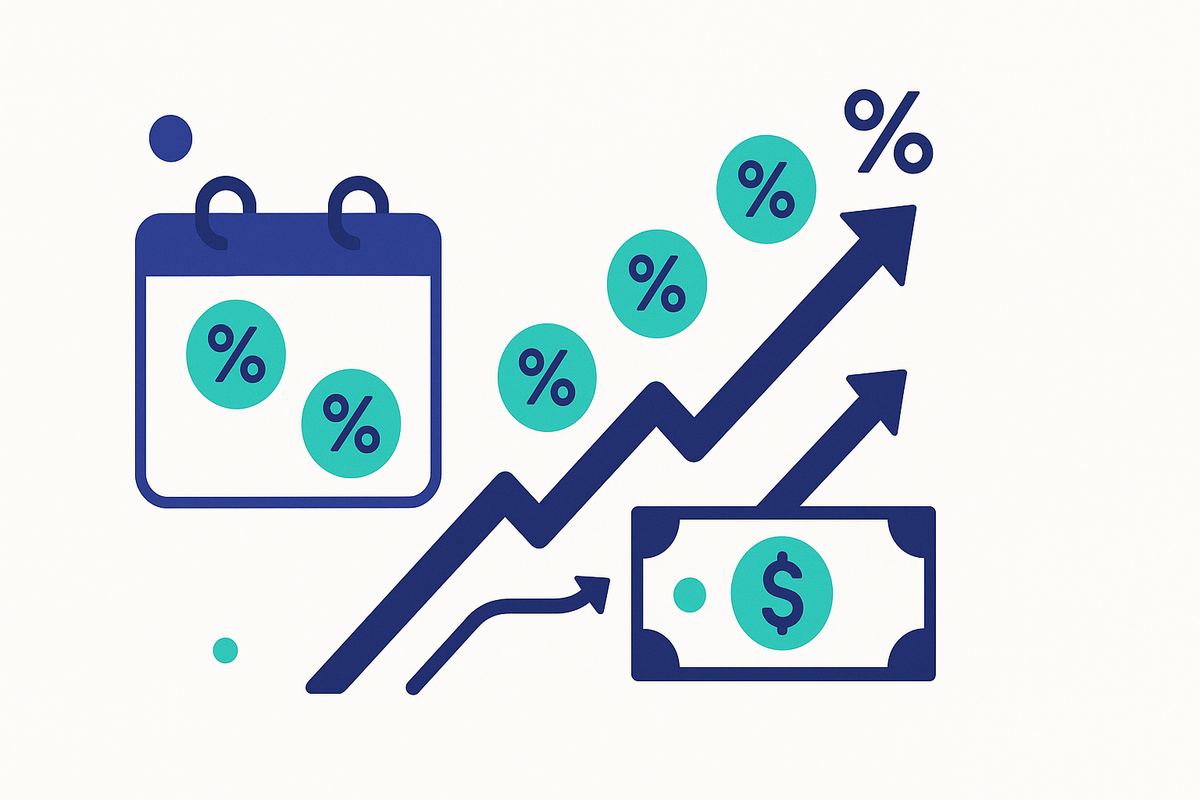
If you sell B2B on credit terms, you've seen the notation: 2/10 net 30. It looks like a math equation, but it's a simple trade-off. The buyer gets a 2% discount if they pay within 10 days. Otherwise, the full invoice amount is due in 30 days.
The logic is straightforward. You sacrifice a small percentage of revenue in exchange for faster cash. The buyer saves money by paying early. Both sides win - at least in theory.
But the real question isn't what 2/10 net 30 means. It's whether offering early payment discounts makes financial sense for your specific business. Because for many B2B companies, the math doesn't work out the way they expect.
The Annualized Cost of Early Payment Discounts
Here's where most finance teams get surprised. A 2% discount for paying 20 days early (day 10 instead of day 30) doesn't cost you 2%. The annualized cost is much higher.
The formula is:
Annualized Cost = (Discount / (1 - Discount)) x (365 / (Full Terms - Discount Period))
For 2/10 net 30:
- Discount = 0.02
- Full terms = 30 days
- Discount period = 10 days
- Days accelerated = 20
That gives you: (0.02 / 0.98) x (365 / 20) = 37.2% annualized
You're effectively paying 37.2% annual interest to get your cash 20 days earlier. For context, most revolving credit lines cost 8-15% annually. If your goal is simply to accelerate cash collection, borrowing against receivables or using a credit facility is dramatically cheaper.
This is the critical insight that many companies miss when designing their payment terms strategy.
When Early Payment Discounts Actually Make Sense
Despite the high annualized cost, there are legitimate scenarios where offering early payment discounts is the right move.
You Have No Access to Affordable Credit
If your business can't secure a credit line - maybe you're a startup without sufficient operating history, or you're in an industry banks consider high-risk - the 37% annualized cost of early payment discounts might still be cheaper than your alternatives. Merchant cash advances and some factoring arrangements charge effective rates above 40%. In that context, 2/10 net 30 starts to look reasonable.
Your DSO Is Dangerously High
When your days sales outstanding has crept well past your stated terms - say your terms are net 30 but you're actually collecting at day 55 - early payment discounts can reset buyer behavior. The discount creates a concrete incentive to prioritize your invoice. Some companies report DSO improvements of 15-20 days after introducing structured discount programs.
You're in a High-Margin Business
If your gross margins are 60%+ (common in software, specialty chemicals, and professional services), the 2% haircut is relatively painless. On a $100,000 invoice with 65% margins, you're giving up $2,000 of a $65,000 gross profit. You keep $63,000 and get it three weeks faster. That's a trade many CFOs will take.
You Need to Reduce Credit Risk Exposure
Every day an invoice sits unpaid is a day of credit exposure. If you sell to buyers in volatile industries or regions with elevated country risk, getting paid faster reduces your window of vulnerability. The discount becomes a form of risk mitigation, not just a cash flow tool.
When Early Payment Discounts Don't Make Sense
Low-Margin Businesses
If you're operating on 15-20% margins - typical in distribution, logistics, and commodity trading - a 2% discount eats a disproportionate share of your profit. On that same $100,000 invoice at 18% margin, you're giving up $2,000 of an $18,000 gross profit. That's 11% of your margin, which is hard to justify.
Buyers Who Would Pay on Time Anyway
This is the most common mistake. Companies blanket-offer early payment discounts to all customers, including the ones who already pay on day 28. Those buyers happily take the 2% discount and pay on day 10 - but you haven't actually accelerated anything meaningful. You've just given away margin to buyers who were never a collection problem.
The fix: target discounts at your slow-paying accounts, not your reliable ones. This requires understanding your buyer payment behavior at a granular level.
When Buyers Game the System
A known problem with 2/10 net 30: some buyers take the 2% discount and still pay on day 30. They deduct the discount from the remittance regardless of timing. Chasing these deductions creates administrative overhead and awkward conversations. Before rolling out discounts, assess whether your buyer base has a pattern of unauthorized deductions.
Beyond 2/10 Net 30: Other Discount Structures
The 2/10 net 30 structure is the most common, but it's not the only option. Consider these variations depending on your objectives:
1/10 Net 30
A smaller discount (1%) reduces your cost while still incentivizing early payment. The annualized cost drops to about 18.25% - still expensive compared to a credit line, but more palatable for lower-margin businesses.
2/10 Net 60
If your standard terms are net 60, offering 2/10 net 60 accelerates payment by 50 days. The annualized cost falls to about 14.9% - much closer to traditional borrowing costs. The longer the gap between discount period and full terms, the better the economics for the seller.
Sliding Scale Discounts
Some companies offer tiered discounts: 2% if paid in 10 days, 1% if paid in 20 days, net 30. This gives buyers flexibility and captures payments at multiple acceleration points. It's more complex to administer but can optimize total cash flow impact.
Dynamic Discounting
Technology-enabled dynamic discounting platforms let you offer variable discount rates based on how early the payment arrives. Day 5 might earn a 2.5% discount, day 15 a 1% discount, with the rate decreasing linearly. This approach maximizes the cash flow benefit of each early payment and gives buyers more options.
Know which buyers actually need incentives to pay on time. Get real-time buyer intelligence.
Try BuyersIntelligence.ai Free →How to Decide: A Practical Framework
Before offering early payment discounts, run through this checklist:
Step 1: Calculate Your Cost of Capital
What does it actually cost you to borrow? If your credit line charges 10% annually and 2/10 net 30 costs 37% annualized, the discount is almost 4x more expensive than borrowing. In that case, draw on your line instead and skip the discount.
Step 2: Segment Your Buyers
Not every buyer should get the same terms. Segment your accounts receivable by payment behavior:
- Fast payers (pay within terms): No discount needed. They're already performing.
- Moderate slow payers (5-15 days late): Good candidates for a small discount.
- Chronic slow payers (30+ days late): Discounts may help, but consider whether the issue is willingness or ability. A buyer under financial stress won't pay early for 2% if they're struggling to pay at all.
Understanding buyer risk is essential here. A proper buyer risk assessment tells you whether a slow-paying buyer is a discount candidate or a collections risk.
Step 3: Model the Margin Impact
For each buyer segment, model what the discount does to your margins. Use actual invoice data, not averages. A $500,000 account at 2% discount costs $10,000 annually - is that worth the cash flow improvement?
Step 4: Set Up Tracking
If you offer discounts, track adoption rates, actual payment timing, unauthorized deductions, and impact on DSO. Review quarterly. Many companies set up discount programs and never measure whether they're working.
How Early Payment Discounts Interact with Credit Policy
Your discount strategy should align with your broader credit policy. A few principles:
Don't use discounts as a substitute for credit limits. If a buyer's credit limit should be $50,000, offering them a discount doesn't change their risk profile. Set appropriate limits first, then layer on discounts as a cash flow tool.
Align discount offers with buyer risk tiers. Higher-risk buyers might get shorter terms with no discount option. Lower-risk, high-volume buyers might get favorable discount terms as a relationship builder.
Document everything in your credit policy. Who can approve discount terms? What's the maximum discount percentage? How are unauthorized deductions handled? Without clear policy, discount decisions become ad hoc and inconsistent.
The Buyer's Perspective: Why They Take (or Skip) Discounts
Understanding why buyers take early payment discounts helps you design better programs. Here's what drives buyer behavior:
Cash-rich buyers take discounts aggressively. For a buyer with excess cash, 2/10 net 30 is a risk-free return of 37% annualized. No investment can match that. These buyers will always take the discount - which means you need to evaluate whether giving margin to cash-rich companies serves your interests.
Cash-constrained buyers skip discounts. If a buyer is stretching their own payables to manage cash flow, paying you early isn't an option regardless of the discount. These are often the buyers you most want to collect from quickly - and discounts won't move the needle.
Some buyers view discounts as entitlements. Once offered, it can be difficult to retract a discount program. Budget accordingly and set clear time limits or review periods.
Alternatives to Early Payment Discounts
If the economics of 2/10 net 30 don't work for you, consider these alternatives for accelerating cash:
- Invoice factoring: Sell receivables to a factor at a 1-3% discount and get cash immediately. Cost is similar to early payment discounts but doesn't require buyer participation.
- Supply chain financing: Reverse factoring programs let buyers pay at their normal terms while you get paid early by a financing partner. The cost is based on the buyer's credit quality, not yours.
- AR automation: Automated reminders, dunning workflows, and digital payment options can reduce DSO by 10-15 days with no margin sacrifice. See our guide to AR automation.
- Shorter standard terms: Instead of net 30 with a discount, set terms at net 15 or net 20 from the start. This avoids the discount cost entirely, though it may affect competitiveness.
Key Takeaways
Early payment discounts are a legitimate cash flow tool, but they're expensive. The annualized cost of 2/10 net 30 is over 37%, making it one of the most costly ways to accelerate collections. They make sense when you lack affordable credit alternatives, when DSO is dangerously high, when margins are strong enough to absorb the cost, or when reducing credit exposure to high-risk buyers is the priority.
For everyone else, cheaper alternatives exist. The key is doing the math, segmenting your buyers, and making discount decisions based on data rather than industry convention. Because offering 2/10 net 30 to a buyer who already pays on day 25 isn't a cash flow strategy - it's just a margin leak.
Stop guessing about buyer risk. Get instant buyer intelligence.
Try BuyersIntelligence.ai - Free →