Beneficial Ownership Verification for B2B Buyers: How to Find Out Who Really Owns the Company You're Extending Credit To
Beneficial ownership verification shows who actually owns and controls a B2B buyer. Learn how to trace ownership, spot hidden control, and use it in credit decisions.
Beneficial Ownership Verification for B2B Buyers: How to Find Out Who Really Owns the Company You're Extending Credit To
Picture a buyer whose registration checks out, whose address is real, and whose credit file is clean. Now picture finding out - only after the account goes 90 days past due - that the company is owned by a holding company, which is owned by a trust in another jurisdiction, which is controlled by an individual who also controls several other entities that have stopped paying suppliers.
Nothing in the file was false. The question that matters most simply never got asked: who actually owns and controls this buyer?
That question is the core of beneficial ownership verification. It started life as an anti-money-laundering requirement for banks, but it has become one of the most practical tools a B2B credit team can use. This guide explains what beneficial ownership is, why it matters for trade credit, how to trace it, and how to fold it into your onboarding and monitoring without turning every new account into a forensic investigation.
What Is Beneficial Ownership?
A beneficial owner is the natural person (a real human being) who ultimately owns or controls a legal entity, even if their name appears nowhere on the company's public registration. The legal owner of a company might be another company, a trust, a nominee, or a foundation. The beneficial owner is the person at the end of that chain who benefits from the entity's profits or directs what it does.
Two ideas are bundled together here:
- Ownership. Holding a meaningful share of the equity, directly or through other entities. Many regulatory frameworks use a threshold of 25% as the default trigger, though thresholds vary by jurisdiction and purpose.
- Control. Having the power to direct the business without holding a majority of shares - through voting agreements, board appointment rights, family arrangements, or senior management authority.
For credit purposes, control matters at least as much as ownership. A person holding 10% of the shares but who signs the contracts, approves the payments, and runs the bank accounts is more relevant to your payment risk than a passive 30% investor.
Why Beneficial Ownership Matters for B2B Credit Risk
Compliance teams care about beneficial ownership because of money laundering and sanctions. Credit teams should care for different, more commercial reasons.
1. Your real counterparty may be thinly capitalized. The legal entity that signs your credit application is often a special-purpose or operating subsidiary with limited assets. Knowing who is behind it tells you whether there is a stronger party, or an individual with a track record, that you can reasonably look to. This connects directly to personal guarantees in B2B credit: you cannot ask the right person to guarantee an obligation if you don't know who they are.
2. Serial defaults hide behind new entities. Owners who have run companies into the ground can reappear with a freshly incorporated entity that has a spotless record. The entity is new, but the person is not. If you only look at the company file, you will miss the pattern. This is especially relevant for thin-file B2B buyers, where the company has no history but its owners might.
3. Related-party exposure. Several of your customers may be controlled by the same person or group. Each looks like a separate, modest account. Together they are one concentrated exposure. This is the ownership-side version of customer concentration risk, and it will never show up in a report that treats each account in isolation.
4. Sanctions and restricted-party exposure. Sanctions regimes commonly extend to entities owned or controlled by listed persons, even when the entity itself isn't named on any list. Screening only the company name can miss that. See our guide to sanctions screening for B2B buyers for how to screen both the entity and its principals.
5. Fraud and bust-out patterns. Opaque ownership structures are a common feature of shell companies and bust-out schemes. Complex ownership isn't proof of fraud - plenty of legitimate groups are complicated - but unexplained complexity combined with other warning signs deserves escalation. Our piece on how AI detects buyer fraud covers the wider set of signals.
6. Change of control. Ownership is not static. When a buyer is acquired, merged, or sold to a private equity owner, the credit file you built at onboarding can go stale overnight. See change of control credit risk for the re-underwriting triggers. Knowing the ownership chain at onboarding gives you a baseline to compare against.
The Difference Between Legal Ownership and Beneficial Ownership
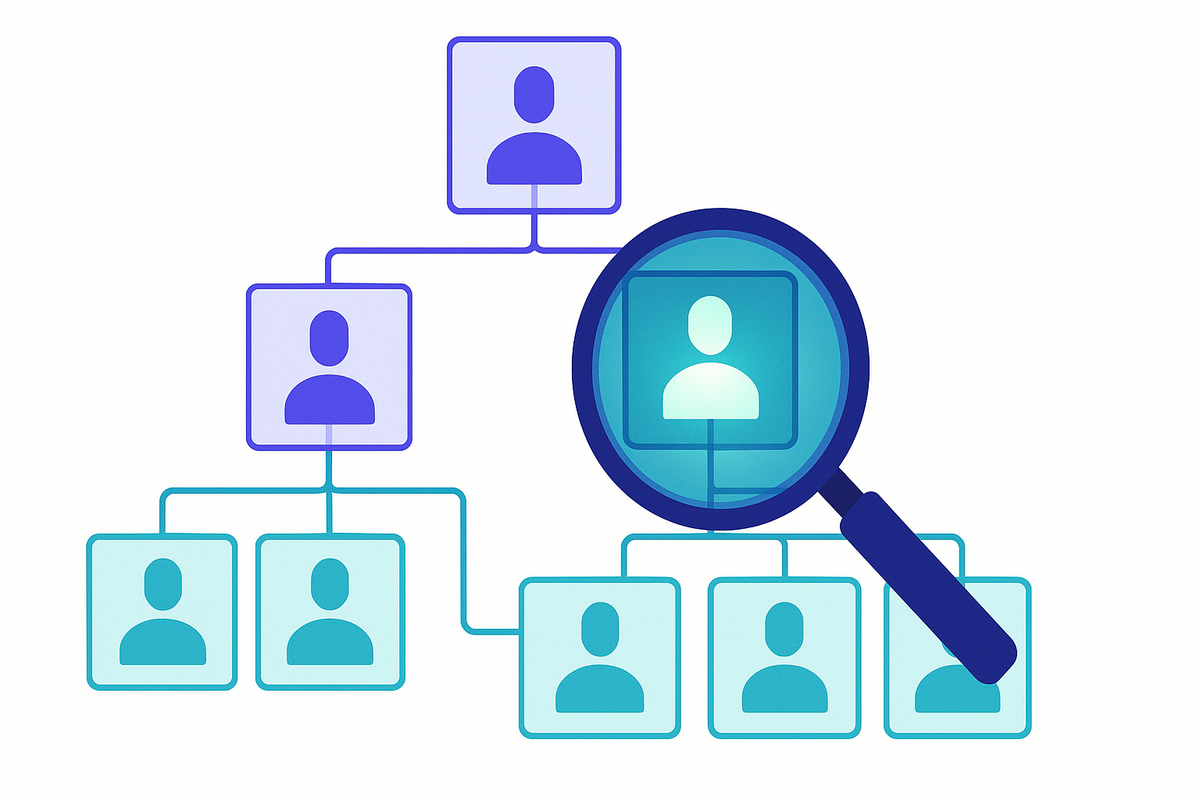
It helps to see how the layers stack up. A typical structure might look like this:
| Layer | What it is | What a basic registry check shows |
|---|---|---|
| Buyer (operating company) | The entity that places orders and owes you money | Name, registration number, address, directors |
| Immediate parent | A holding company that owns the shares | Possibly listed as shareholder or "person with significant control" |
| Intermediate holdings | One or more further holding entities, possibly in other jurisdictions | Often not visible, or visible only in the foreign registry |
| Ultimate beneficial owner(s) | The natural person(s) who own or control the structure | Frequently not shown unless a beneficial ownership register exists and is accessible |
A basic business credit check typically stops at the first or second row. Beneficial ownership verification means continuing until you reach a person - or until you reach a point where you can reasonably say the structure cannot be traced, which is itself a finding.
Where Beneficial Ownership Information Comes From
There is no single global database. Information comes from a patchwork of sources, and which ones are available depends on where the buyer is incorporated.
Public company registries
Many jurisdictions publish basic corporate records: legal name, registration number, registered address, directors, and sometimes shareholders. These are the starting point, and many are free. Our guide to running a business credit check without paying $500 covers practical free and low-cost registry sources.
Beneficial ownership and "persons with significant control" registers
Some jurisdictions maintain dedicated registers of beneficial owners. The UK, for example, requires companies to report people with significant control, and that information is published through its company registry. In the EU, national beneficial ownership registers exist, but public access has been restricted in many member states following a 2022 European Court of Justice ruling, so access may require demonstrating a legitimate interest. In the United States, federal beneficial ownership reporting rules have changed several times and their scope has been narrowed, so you should not assume a federal register will answer the question for a domestic buyer.
Because these rules change, check the current position for each jurisdiction that matters to your portfolio rather than relying on a fixed assumption.
Commercial data providers
Credit bureaus and KYB providers aggregate registry data, corporate-family trees, and sometimes ownership percentages. They are useful for speed and for cross-border coverage, but quality varies by country, and "ownership data not available" is common in lower-coverage markets. Check how recent the data is and where it comes from.
Information from the buyer
Often the most direct route is simply to ask. A well-designed credit application should collect the names of owners above a set threshold, the names of senior officers with authority over payments, the ultimate parent if any, and a signed confirmation that the information is accurate. Then verify what they tell you against independent sources. A buyer who volunteers a clear ownership chart is usually easier to trust than one who resists the question.
Other corroborating sources
- Court and lien records. Judgments, liens, and security-interest filings sometimes name individuals or related entities. See UCC-1 filings for B2B trade creditors for how filings can reveal who else has a claim on the buyer's assets.
- Press and professional profiles. News coverage, funding announcements, and professional networking profiles can confirm or contradict the ownership story.
- Domain and address overlap. Multiple supposedly unrelated buyers sharing an address, phone number, bank account, or email domain may be linked.
Want to check a buyer's risk profile in 60 seconds? Try BuyersIntelligence.ai - free. It pulls together registration, ownership, and risk signals so your team starts with a clear picture instead of an empty file.
A Practical Beneficial Ownership Verification Process
Full forensic ownership tracing for every account is neither affordable nor necessary. The goal is a proportionate process: light for small exposures, deeper where the money or the red flags justify it.
Step 1: Decide your threshold and tiers
Write down in your credit policy which accounts get which level of ownership review. A simple structure:
- Tier 1 - low exposure, low-risk profile. Collect owner names on the application and confirm the entity against a registry.
- Tier 2 - moderate exposure, or any thin-file or foreign buyer. Trace ownership to the first level of natural persons above your threshold, and screen those individuals.
- Tier 3 - high exposure, complex structure, or elevated country risk. Trace the full chain to the ultimate beneficial owners, document the structure, and require senior credit sign-off.
Tie the tiers to the same exposure levels you use when you set B2B credit limits, so the extra work happens where the risk is.
Step 2: Collect ownership information at application
Ask for:
- Legal name and registration number of the buyer
- Names, dates of birth (where lawful to collect), and country of residence of owners above your threshold
- Name and registration details of any parent or holding company
- Names of directors and of anyone authorized to place orders or approve payments
- Confirmation of whether the company is owned by, or owns, any other entity that buys from you
Keep in mind data protection rules. Collecting personal information about individuals carries obligations in many jurisdictions, so collect only what you need and handle it accordingly.
Step 3: Verify against independent sources
Compare what the buyer told you with what registries and data providers show. Mismatches are not automatically sinister - registries lag, and companies make clerical errors - but each one needs an explanation. This is a natural extension of the verification steps in how to verify a new B2B buyer before extending credit and the broader KYB approach.
Step 4: Screen the people, not just the company
Run sanctions, restricted-party, and adverse-media checks on the individuals you identified, not only on the legal entity. Also look for prior insolvencies, director disqualifications (where such registers exist), and previous companies where they held control that failed owing suppliers.
Step 5: Check for links to your existing accounts
Search your ledger for overlapping owners, directors, addresses, and bank details. If the new buyer is controlled by the same person as an existing customer, treat their combined exposure as a single risk when setting the limit.
Step 6: Document the result - including what you couldn't find
Record the ownership chain, the sources, the date, and who reviewed it. If you could not trace the structure past a certain point, write that down too, with the reason. An untraceable structure is a risk factor you can price, restrict, or decline - but only if it is recorded rather than quietly ignored.
Step 7: Re-check on triggers, not just on a calendar
Ownership changes between reviews. Set triggers that prompt a fresh look: a new parent company, a change in directors, a change in the ultimate owner, a payment pattern shift, or adverse news. This is the same logic behind continuous buyer monitoring: ownership data is a living signal, not a one-time form.
Red Flags in Ownership Structures
Complexity alone is not a red flag. A large group will naturally have layers of subsidiaries. What matters is whether the complexity has a plausible business reason and whether the buyer is willing to explain it. Warning signs include:
- Ownership through multiple layers across several jurisdictions with no business rationale offered
- Nominee directors or shareholders with no apparent connection to the business, or addresses shared by hundreds of unrelated companies
- Reluctance or refusal to identify owners, or ownership information that changes between conversations
- Recent changes of ownership shortly before a large order or a request for a higher limit
- A new entity controlled by individuals linked to previous insolvencies where suppliers were left unpaid
- Overlap with existing accounts that are already late, on hold, or in dispute
- Mismatch between stated size and ownership structure - a small trading business inside a sprawling offshore structure with no clear reason
No single item proves wrongdoing. Two or three together, especially alongside the other red flags when evaluating new B2B customers, justify escalation, tighter terms, or a decision not to proceed.
Using Beneficial Ownership to Shape the Credit Decision
Identifying the owners is only useful if it changes what you do. Here is how it feeds into practical decisions.
Credit limit. If the buyer is a thinly capitalized subsidiary of a strong, identifiable group, you may be willing to extend more credit - ideally backed by a parent guarantee. If the buyer is an isolated entity with an opaque structure, you may cap exposure or require security.
Security and guarantees. Knowing the owners lets you request personal or corporate guarantees from the right parties. Keep in mind that a guarantee is only as good as the guarantor's ability to pay and the enforceability of the document in the relevant jurisdiction.
Payment terms. Where you cannot establish who is behind the buyer, shorter terms, deposits, or prepayment for early orders are reasonable. See how to set payment terms that protect your cash flow.
Aggregated exposure. Where multiple accounts share control, apply one combined limit rather than several independent ones. Otherwise you're granting the same owner credit repeatedly under different names.
Escalation and refusal. Some structures should simply not be approved at the credit-team level. Define in your policy which findings (for example, a sanctioned beneficial owner, or a refusal to disclose ownership above threshold) trigger mandatory escalation or automatic decline.
Common Mistakes in Beneficial Ownership Verification
Stopping at the first layer. Seeing a holding company named as the shareholder and calling it done. A company is not a beneficial owner; keep going until you reach a person or document why you can't.
Treating the registry as the truth. Registries often rely on self-reported information, can be out of date, and in some places are not independently verified. Use them as a data point, not a guarantee.
Ignoring control without equity. Focusing only on percentage ownership and missing the person who actually runs the business through other means.
Verifying once and never again. Ownership at onboarding says little about ownership two years later. Without triggers, the file goes stale.
Applying the same depth everywhere. Full tracing for a small, low-risk account wastes resources and slows sales. No tracing for a large, complex account is how surprises happen. Use tiers.
Beneficial Ownership Verification Checklist
- [ ] Credit application collects owner names above your threshold, parent entity, and authorized signatories
- [ ] Buyer entity verified against an official registry
- [ ] Ownership traced to natural persons (or non-traceability documented with reasons)
- [ ] Individuals screened for sanctions, adverse media, and prior insolvencies
- [ ] Ledger searched for overlapping owners, addresses, and bank details
- [ ] Combined exposure applied where multiple accounts share control
- [ ] Guarantees or security requested from the appropriate parties where warranted
- [ ] Findings, sources, date, and reviewer documented
- [ ] Re-check triggers set for ownership changes and other risk events
- [ ] Personal data handled in line with applicable privacy requirements
Know Who You're Really Lending To
A credit file tells you about a company. Beneficial ownership tells you about the people behind it - and in B2B credit, the people are often what decides whether you get paid. You don't need to investigate every buyer to the same depth, but you do need a process that asks the question, records the answer, and revisits it when something changes.
Start with a tiered policy, collect ownership information at application, verify it independently, and let the findings flow into limits, terms, and security. Do that consistently and you will catch the structures that hide risk long before they show up in your aging report.
Stop guessing about buyer risk. Check any buyer on BuyersIntelligence.ai and get registration, ownership, and risk signals in one place - so you know who you're really extending credit to.
This article is general information about B2B credit practices and is not legal or financial advice. Beneficial ownership laws, registry access, and data protection requirements vary by jurisdiction and change frequently - confirm the current rules that apply to you.
Stop guessing about buyer risk. Get instant buyer intelligence.
Try BuyersIntelligence.ai - Free →