Customer Concentration Risk in B2B: How to Spot It, Measure It, and Fix It
Customer concentration risk can devastate your business if a top buyer defaults or churns. Learn how to measure concentration risk, set thresholds, and build a diversified B2B revenue base.
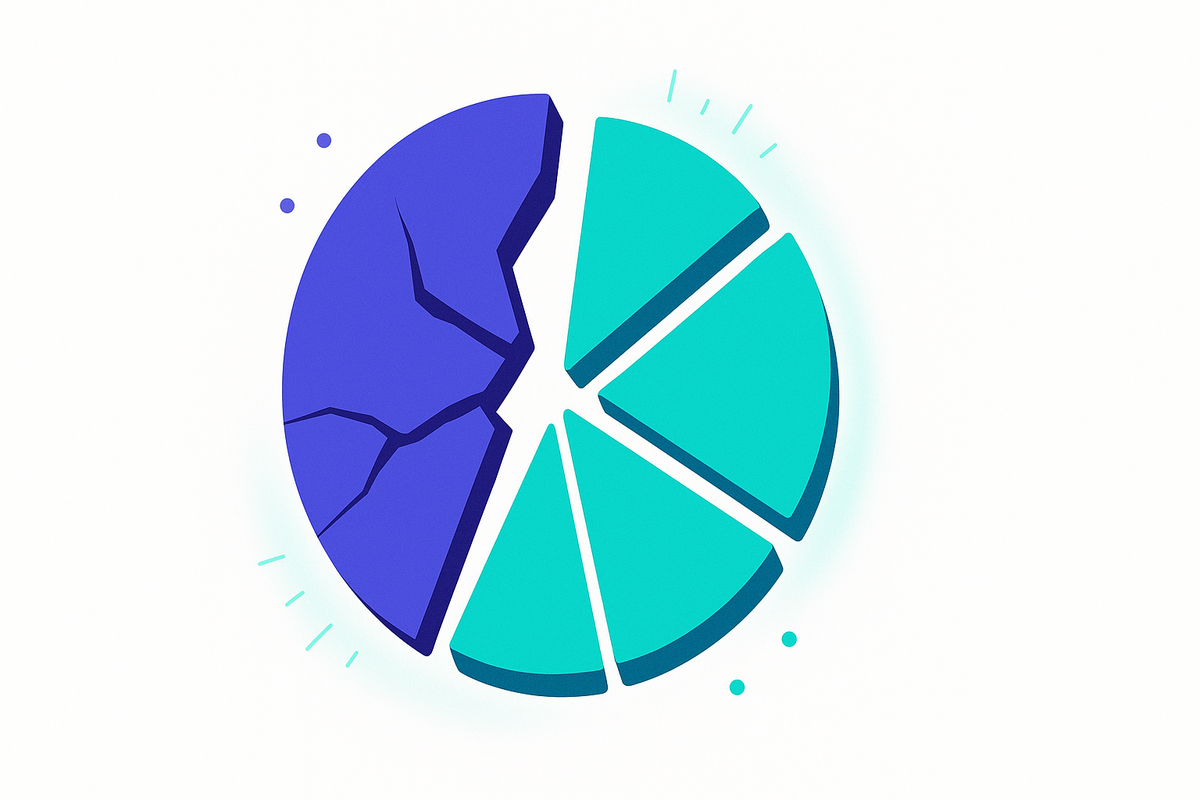
If your top three customers account for more than 40% of your revenue, you have a problem - even if you do not know it yet.
Customer concentration risk is one of the most underestimated threats in B2B trade. It feels comfortable to rely on big accounts. They pay well, they order consistently, and they keep the lights on. But that comfort is a trap. When a major buyer defaults, delays payments by 90 days, or simply takes their business elsewhere, the impact is not proportional - it is existential.
This guide breaks down what customer concentration risk actually is, how to measure it, what thresholds matter, and what practical steps you can take to protect your business without turning away good revenue.
What Is Customer Concentration Risk?
Customer concentration risk occurs when a disproportionate share of your revenue, receivables, or profit depends on a small number of buyers. In B2B trade, this shows up in several ways:
- Revenue concentration - A handful of customers generate most of your sales
- Receivables concentration - Your outstanding AR is dominated by a few large invoices
- Profit concentration - Your margins are disproportionately tied to specific accounts
- Geographic concentration - Most of your buyers sit in one country or region
The danger is straightforward: if one of those concentrated accounts experiences financial distress, pivots to a competitor, or simply renegotiates terms, your entire business model can crack.
This is not a theoretical problem. According to Euler Hermes (now Allianz Trade), buyer default is the primary cause of business insolvency in B2B trade, and the risk multiplies when revenue is concentrated. Companies with their top customer representing more than 25% of revenue face default exposure that is three to five times higher than diversified peers.
Why B2B Companies Fall Into the Concentration Trap
Customer concentration rarely happens by design. It builds gradually through several common patterns:
The anchor client effect. A startup lands one large client early on. That client funds growth, hires, and expansion. Over time, the company builds its operations around serving that client. By year three, that single account might represent 35-50% of revenue - and the company's processes, team size, and infrastructure all assume that revenue continues.
The path of least resistance. Selling to existing large accounts is easier than acquiring new ones. Sales teams naturally upsell and cross-sell to their biggest customers because the CAC is lower and the close rate is higher. Each quarter, concentration deepens.
Industry dynamics. In some B2B verticals - industrial components, specialty chemicals, contract manufacturing - there are simply fewer potential buyers. Market structure itself drives concentration.
Payment terms as a moat. Large buyers often negotiate favorable payment terms (Net 60, Net 90). Smaller competitors cannot match those terms, so the large buyer stays loyal - but at the cost of tying up significant working capital in a single relationship.
Want to see how concentrated your buyer risk really is? BuyersIntelligence.ai gives you instant visibility into your buyer portfolio - including risk scores and concentration alerts.
How to Measure Customer Concentration Risk
You cannot manage what you do not measure. Here are three practical methods for quantifying concentration risk in your B2B portfolio.
The Revenue Percentage Method
The simplest approach: calculate each customer's share of total revenue.
- Low risk: No single customer exceeds 10% of revenue
- Moderate risk: Top customer is 10-20% of revenue
- High risk: Top customer exceeds 20% of revenue
- Critical risk: Top customer exceeds 30% of revenue
The SEC requires public companies to disclose any customer representing more than 10% of revenue. That threshold exists for a reason - investors consider it a material risk factor.
The Herfindahl-Hirschman Index (HHI)
For a more rigorous measure, use the HHI. Square each customer's revenue percentage and sum the results.
Example: If you have four customers contributing 40%, 30%, 20%, and 10% of revenue:
HHI = 40² + 30² + 20² + 10² = 1,600 + 900 + 400 + 100 = 3,000
Interpretation: - Below 1,500: Low concentration - 1,500-2,500: Moderate concentration - Above 2,500: High concentration
A perfectly diversified portfolio across 100 equal customers would score 100. A single-customer business scores 10,000. Most B2B companies land somewhere between 1,500 and 4,000.
The Receivables Concentration Test
Revenue concentration tells you about past performance. Receivables concentration tells you about current exposure. Calculate the percentage of your total AR represented by your top five accounts.
If more than 50% of your outstanding receivables sit with five or fewer buyers, your cash flow is dangerously dependent on those specific companies paying on time.
This is where continuous buyer monitoring becomes critical. A quarterly credit review will not catch the signals fast enough.
The Real-World Impact of Customer Concentration
The consequences of high concentration extend beyond the obvious default scenario:
Negotiating Power Shifts to the Buyer
When a buyer knows they represent 30% of your revenue, they know you cannot afford to lose them. This gives them leverage to:
- Demand extended payment terms (Net 60 becomes Net 90)
- Push for volume discounts that erode your margins
- Delay payments without consequence
- Request custom services or SLAs that increase your costs
Over time, your most concentrated customer becomes your least profitable one on a per-dollar basis - while simultaneously being the one you can least afford to lose.
Valuation and Financing Penalties
Lenders and investors penalize customer concentration heavily:
- Bank lines of credit often exclude concentrated receivables from borrowing base calculations
- Factoring companies apply higher discount rates to invoices from concentrated portfolios
- M&A valuations typically apply a 15-25% discount when a target company has high customer concentration
- Trade credit insurance providers may decline coverage or increase premiums for concentrated portfolios
If you are planning to raise capital, seek acquisition, or even refinance debt, customer concentration will cost you real money in lower valuations and higher interest rates.
Operational Fragility
High concentration creates hidden operational risks. When your largest customer changes their ordering patterns, your entire supply chain, staffing model, and inventory planning gets disrupted. Companies with concentrated revenue bases report 40% more demand volatility than diversified peers, according to research from the Association for Financial Professionals.
Setting Customer Concentration Thresholds
Every B2B company should establish explicit concentration limits as part of their credit policy. Here is a practical framework:
Individual Customer Limits
| Risk Level | Single Customer Revenue Cap | Action Required |
|---|---|---|
| Green | Below 10% | Normal operations |
| Yellow | 10-15% | Active diversification plan required |
| Orange | 15-25% | Board/leadership review, quarterly stress tests |
| Red | Above 25% | Immediate diversification strategy, enhanced monitoring |
Portfolio-Level Limits
- Top 5 customers should not exceed 40% of total revenue
- Top 10 customers should not exceed 60% of total revenue
- No single industry should represent more than 30% of your customer base
- No single country (for exporters) should represent more than 25% of revenue
These thresholds should be reviewed annually and adjusted based on your company's risk tolerance, industry norms, and growth stage.
Seven Strategies to Reduce Customer Concentration Risk
Identifying concentration is the first step. Reducing it requires deliberate action across sales, finance, and operations.
1. Set Credit Limits That Reflect Concentration - Not Just Creditworthiness
Most B2B companies set credit limits based solely on the buyer's ability to pay. That misses half the equation. Your credit limit for any single buyer should also factor in what percentage of your total AR that limit represents.
A buyer might have excellent credit - but if extending them a $2M credit line means they represent 35% of your receivables, that limit is too high regardless of their financial strength.
2. Implement Tiered Pricing That Discourages Over-Concentration
Large buyers often get volume discounts. This incentivizes them to consolidate spend with you - deepening concentration. Consider an inverted approach: offer competitive pricing up to a threshold, then flatten or slightly increase pricing beyond it.
This is not about punishing large customers. It is about ensuring that the marginal revenue from a growing account is worth the marginal concentration risk.
3. Diversify Your Sales Pipeline Deliberately
If 80% of your sales team's time goes to your top five accounts, concentration will only deepen. Allocate specific sales resources and budget to new customer acquisition, with targets that explicitly measure portfolio diversification - not just revenue growth.
Track metrics like: - Number of new customers acquired per quarter - Revenue from customers onboarded in the last 12 months - Percentage of revenue from customers outside your top 10
4. Use Trade Credit Insurance Strategically
Credit insurance can mitigate the financial impact of a concentrated buyer defaulting. However, insurers themselves may impose concentration limits or charge higher premiums for concentrated portfolios.
Use credit insurance as a bridge while you diversify - not as a permanent solution for concentration risk.
5. Shorten Payment Terms for Concentrated Accounts
If your largest customer is on Net 90 terms, you have 90 days of exposure multiplied by their order volume. Renegotiating to Net 45 or Net 30 cuts your receivables exposure in half - even if revenue concentration stays the same.
This reduces the cash flow impact if that buyer delays payment or defaults. Learn more about choosing the right terms in our guide to payment terms.
6. Build Early Warning Systems
Do not wait for a concentrated buyer to miss a payment before you react. Implement continuous monitoring that tracks:
- Changes in the buyer's payment patterns (gradually stretching from Net 30 to Net 45)
- Public financial signals (credit rating downgrades, lawsuits, leadership changes)
- Industry-level stress (commodity price swings, regulatory changes, trade disputes)
- News sentiment and market signals
Tools like BuyersIntelligence.ai automate this monitoring, giving you weeks or months of advance warning before a buyer's financial situation deteriorates.
7. Scenario-Plan for Buyer Loss
For any customer representing more than 15% of revenue, run a formal scenario plan:
- What happens to cash flow if this buyer disappears tomorrow? Can you cover payroll and fixed costs for 6 months?
- What happens if they stretch payments by 60 days? Can your working capital absorb the gap?
- What is your replacement timeline? How long would it take to replace that revenue with new accounts?
These scenarios should be updated quarterly and shared with your finance and leadership teams.
How Buyer Intelligence Reduces Concentration Risk
Traditional credit management focuses on whether a buyer can pay. Buyer intelligence adds the dimension of whether you should be increasing your exposure to that buyer - a fundamentally different question.
With a buyer intelligence platform, you can:
- Monitor your portfolio composition in real time - See concentration metrics update as orders come in, not just at quarter-end
- Get alerted when thresholds are breached - Automatic notifications when a buyer crosses your concentration limits
- Assess new buyer risk before onboarding - Make faster, better decisions about new buyer verification so you can diversify with confidence
- Track early warning signals - Catch deterioration in concentrated accounts before it becomes a crisis
- Score and rank your entire portfolio - Understand which accounts carry the most risk relative to their revenue contribution
The difference between a credit report and buyer intelligence is the difference between a snapshot and a surveillance system. When concentration risk is your concern, you need the surveillance system.
Building a Concentration-Aware Culture
Reducing customer concentration is not a one-time project. It requires embedding concentration awareness into your company's operating rhythm:
Monthly: Review your top 10 customers' revenue share and receivables share. Flag any account that has grown by more than 2 percentage points.
Quarterly: Calculate your HHI score and compare it to the previous quarter. Review individual and portfolio-level thresholds.
Annually: Update your concentration policy. Adjust thresholds based on company growth, market changes, and risk appetite. Run stress tests on your top five accounts.
At every credit decision: Before extending or increasing a credit limit, ask: "What does this do to our concentration metrics?" Make it a required field in your credit approval workflow.
Key Takeaways
Customer concentration risk is manageable - but only if you measure it, set explicit thresholds, and take deliberate action to diversify. Here is what to do this week:
- Calculate your concentration metrics. What percentage of revenue comes from your top 1, 5, and 10 customers? What is your HHI score?
- Set thresholds. Define your green/yellow/orange/red zones and put them in writing.
- Identify your riskiest concentration. Which single customer would cause the most damage if they left?
- Start monitoring. Set up continuous tracking for your most concentrated accounts.
- Build your diversification plan. Allocate specific resources to new customer acquisition.
Customer concentration does not fix itself. Revenue naturally flows toward your biggest accounts unless you actively manage against it. The companies that thrive long-term are the ones that build diversification into their DNA - not the ones that hope their biggest customer never leaves.
Stop guessing about buyer risk. Get instant buyer intelligence.
Try BuyersIntelligence.ai - Free →