B2B Collections Strategy: How to Get Paid Without Burning Bridges
A practical B2B collections strategy that recovers overdue invoices while preserving customer relationships. Learn the escalation framework, communication templates, and technology that top finance teams use.
Late payments are the silent cash flow killer in B2B trade. According to Atradius, over 55% of B2B invoices in the Americas are paid late - and the longer an invoice ages, the less likely you are to collect it at all.
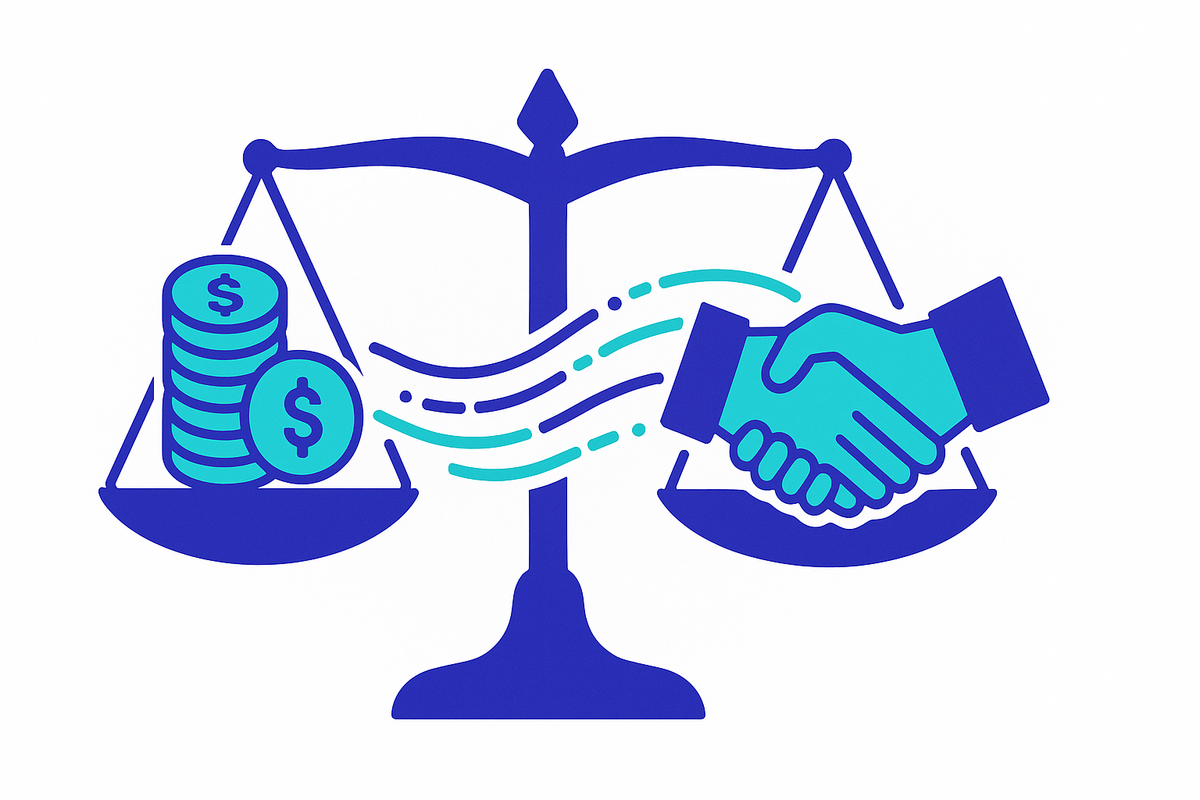
But here's the problem most finance teams face: your late-paying customer is also your customer. Push too hard and you lose the relationship. Push too softly and you become their interest-free bank.
A good B2B collections strategy finds the balance. It recovers cash systematically while keeping the door open for future business. This guide shows you exactly how to build one.
Why B2B Collections Strategy Matters More Than You Think
The cost of late payments goes far beyond the unpaid invoice amount. Every overdue receivable creates a ripple effect across your business:
Cash flow compression. Money tied up in overdue invoices can't fund operations, inventory, or growth. For mid-market companies, even a few large overdue accounts can force you into expensive bridge financing.
Hidden administrative costs. Every follow-up email, phone call, and internal escalation meeting consumes time. Research from the Credit Research Foundation estimates that manual collections activities cost $15-25 per invoice touched - and chronic late payers get touched many times.
Opportunity cost. Credit extended to consistently late-paying customers is credit you could extend to reliable ones. Your credit capacity isn't infinite, and late payers consume a disproportionate share of it.
Relationship damage - from not collecting. This is counterintuitive, but it's real. When you don't follow up on overdue invoices consistently, customers learn they can deprioritize your payments. What starts as a one-time delay becomes a pattern. Early, professional follow-up actually preserves relationships better than silence followed by a sudden escalation.
Want to identify late-payment risk before you extend credit? BuyersIntelligence.ai analyzes buyer payment behavior across multiple data sources - so you can set the right terms from the start.
The B2B Collections Escalation Framework
The most effective B2B collections strategies follow a structured escalation path. Each stage increases urgency while giving the customer a clear way to resolve the situation.
Stage 1: Pre-Due Reminder (3-5 Days Before Due Date)
Most companies skip this step entirely - and it's a mistake. A friendly payment reminder before the due date sets expectations and catches issues early.
Why it works: Many late payments happen because the invoice got lost, went to the wrong person, or has a discrepancy the buyer hasn't flagged. A pre-due reminder surfaces these problems while there's still time to fix them without anyone being "late."
What to communicate: - Reference the invoice number and amount - Confirm the due date - Ask if they need anything to process the payment (updated bank details, PO number, etc.) - Keep the tone helpful, not demanding
Channel: Email is fine for this stage. Automated is ideal - your AR automation system should handle this without manual effort.
Stage 2: First Follow-Up (1-3 Days Past Due)
The invoice is now overdue. Your first follow-up should be prompt but assume good faith. Most first-time late payments are administrative, not intentional.
What to communicate: - Note that the payment is past due - Reattach the original invoice - Ask if there's an issue you can help resolve - Provide clear payment instructions
Channel: Email to the AP contact. If you have a relationship with someone at the company, a brief note to them can accelerate things.
Common mistake: Waiting too long for this step. Many companies wait 15 or even 30 days past due before their first follow-up. By then, the customer has learned that your payment terms are suggestions, not commitments.
Stage 3: Escalated Follow-Up (7-14 Days Past Due)
If the first follow-up didn't produce a response or payment, escalate - but escalate professionally.
What to communicate: - Reference your previous follow-up - State the impact clearly: "This invoice is now X days overdue" - Ask for a specific commitment: a payment date or a call to discuss - Mention your standard process for overdue accounts (without threatening)
Channel: Email plus a phone call. A direct conversation often uncovers the real reason for the delay - cash flow problems, internal approval bottlenecks, or disputes the buyer hasn't communicated.
Key insight: This is where you discover whether you're dealing with a situational delay or a pattern. Check the buyer's payment history and risk profile to understand which it is.
Stage 4: Senior-Level Escalation (15-30 Days Past Due)
When the AP contact isn't responding or committing to a date, it's time to elevate the conversation.
What to communicate: - Escalate to your own manager or VP level - Have them reach out to their counterpart at the customer - Frame it as problem-solving, not confrontation: "We want to find a resolution" - Discuss concrete options: partial payment, a payment plan, or a revised timeline
Channel: Phone or video call between senior contacts. Email alone loses effectiveness at this stage.
Important: Document everything. If this eventually goes to legal or a collections agency, you'll need a clear paper trail showing reasonable attempts to resolve the situation.
Stage 5: Formal Notice (30-45 Days Past Due)
If escalation hasn't worked, move to formal communication. This is where your tone shifts from collaborative to firm.
What to communicate: - A formal demand letter stating the total amount owed (including any applicable late fees) - A deadline for payment (typically 10-15 business days) - The consequences of non-payment: credit hold, service suspension, potential referral to collections - One final offer to discuss a resolution
Channel: Formal letter (email and physical mail). Some companies have legal counsel send this letter for added weight.
Credit hold: At this stage, you should typically suspend new credit to the customer. Continuing to ship on terms while they owe you money compounds your exposure. This is where a solid B2B credit policy pays off - it gives you a documented framework for these decisions.
Stage 6: External Collections or Legal (45+ Days Past Due)
If internal efforts have been exhausted, you have three options:
-
Third-party collections agency. They typically charge 20-50% of the recovered amount. Best for smaller balances where legal action isn't cost-effective.
-
Legal action. File a lawsuit or begin arbitration. Appropriate for larger amounts with clear documentation. Expensive and slow, but sometimes necessary.
-
Write-off. If the cost of recovery exceeds the potential recovery, write it off and apply the lesson to future credit decisions.
B2B Collections Communication Best Practices
How you say things matters as much as what you say. Here's what separates effective collections communication from the kind that damages relationships.
Be Specific, Not Vague
Bad: "You have an outstanding balance. Please remit payment."
Good: "Invoice #4521 for $12,400 was due on June 15th and is now 8 days overdue. Can you confirm when payment will be processed?"
Specificity shows you're organized and tracking things closely. Vague messages are easy to ignore.
Assume Good Faith (Until Proven Otherwise)
Most B2B late payments aren't malicious. The buyer's AP department is overwhelmed, someone went on vacation, there's a system migration happening, or the invoice genuinely got lost. Start from that assumption.
Once you've established a pattern of non-payment despite multiple good-faith attempts, then adjust your approach accordingly.
Always Offer a Path Forward
Every collections communication should include a clear next step for the customer. Don't just state the problem - propose a solution.
- "Can we schedule a 10-minute call to discuss?"
- "Would a payment plan over 60 days work for your situation?"
- "Is there an invoice discrepancy we need to resolve first?"
Document Everything
Keep records of every communication: dates, channels, what was said, and any commitments made. This documentation serves multiple purposes:
- Identifies patterns (is this buyer chronically late?)
- Protects you legally if you need to escalate
- Helps your team maintain consistency across handoffs
- Feeds into your buyer monitoring process
Technology That Improves B2B Collections
Manual collections don't scale. Once you're managing more than 50-100 active accounts, you need systems to handle the volume without dropping balls.
Automated Dunning Sequences
Set up automated email sequences that trigger based on invoice age. A well-designed dunning sequence handles Stages 1-3 without manual intervention for most invoices, freeing your team to focus on the truly problematic accounts.
Key features to look for in dunning automation: - Customizable timing (different sequences for different customer tiers) - Template personalization (invoice details auto-populated) - Escalation triggers (auto-flag for human intervention when needed) - Integration with your ERP or accounting system
Customer Risk Scoring
Not all overdue invoices deserve the same level of attention. A $500 invoice from a Fortune 500 company that's 3 days late is very different from a $50,000 invoice from a new customer that's 15 days late.
AI-powered buyer intelligence tools help you prioritize collections efforts by scoring accounts based on:
- Historical payment behavior
- Financial health indicators
- Industry risk factors
- Current credit exposure
This lets your team focus their limited time on the accounts most likely to become actual losses.
Payment Portals
Make it easy for customers to pay. If a buyer has to mail a check or navigate a confusing wire transfer process, you're adding friction that delays payment.
Modern B2B payment portals let customers: - View all outstanding invoices in one place - Pay via ACH, wire, credit card, or other methods - Set up auto-pay for recurring invoices - Download statements and payment confirmations
Collections Dashboards
Your AR team needs visibility into the full portfolio. A good collections dashboard shows:
- Aging buckets (current, 1-30, 31-60, 61-90, 90+)
- DSO trends by customer segment
- Collector performance metrics
- Escalation queue status
- Promised-to-pay tracking
Building a Collections Policy That Prevents Problems
The best B2B collections strategy is one you rarely need to use at full intensity. Prevention beats cure.
Set Expectations Early
Your credit application and onboarding process should clearly communicate:
- Payment terms and due dates
- Late payment fees (if applicable)
- Your follow-up process for overdue invoices
- Consequences of chronic non-payment (credit hold, terms revision)
When customers know you're organized and systematic about collections, they tend to prioritize your invoices.
Right-Size Credit Terms
One of the most common causes of late payment is mismatched credit terms. Extending Net 60 to a buyer who needs Net 90 based on their cash conversion cycle guarantees late payment.
Use buyer intelligence data to set appropriate payment terms from the start. Match terms to the buyer's actual payment capability, not just their request.
Segment Your Accounts
Not every customer should get the same collections treatment. Segment by:
- Revenue importance. Your top 20% of accounts by revenue might get white-glove treatment with dedicated relationship managers.
- Payment history. Consistently on-time payers who have one late invoice get a lighter touch than chronic late payers.
- Risk profile. High-risk accounts identified through continuous monitoring get earlier and more assertive follow-up.
- Invoice size. Larger invoices justify more intensive collections effort.
Incentivize Early Payment
Consider offering early payment discounts for accounts that consistently pay on time:
- 2/10 Net 30 (2% discount for payment within 10 days)
- 1/15 Net 45 (1% discount for payment within 15 days)
This is often cheaper than the cost of late payment when you factor in administrative overhead, opportunity cost, and financing expenses. For more on structuring these terms, see our guide on Net 30/60/90 payment terms.
Measuring Your B2B Collections Performance
You can't improve what you don't measure. Track these metrics to evaluate and refine your collections strategy:
Days Sales Outstanding (DSO). The headline metric. How quickly are you converting receivables to cash on average? Track the trend, not just the absolute number.
Collections Effectiveness Index (CEI). Measures the percentage of receivables collected within a given period. Formula: (Beginning AR + Monthly Credit Sales - Ending Total AR) / (Beginning AR + Monthly Credit Sales - Ending Current AR) x 100. A CEI above 80% is generally considered good.
Average Days Delinquent (ADD). The average number of days invoices are overdue. A rising ADD indicates your collections process is losing effectiveness.
Bad Debt Ratio. Total write-offs as a percentage of total credit sales. Industry benchmarks vary, but most B2B companies target under 0.5%.
Right-Party Contact Rate. What percentage of your collections calls reach the person who can actually authorize payment? A low rate means you're spending effort talking to the wrong people.
Common B2B Collections Mistakes
Mistake 1: Treating Collections as Adversarial
Collections is a business process, not a fight. The most effective collectors approach conversations as problem-solvers, not enforcers. Ask "How can we resolve this?" before demanding payment.
Mistake 2: Inconsistent Follow-Up
Following up intensely for a week, then going silent for a month, then escalating suddenly is confusing for the customer and ineffective for you. Consistency builds credibility.
Mistake 3: One-Size-Fits-All Approach
Your largest strategic account and a brand-new small customer shouldn't get identical collections emails. Segment your approach.
Mistake 4: Not Learning From Patterns
If the same customer is late on every third invoice, that's not a collections problem - it's a credit terms problem. Use payment pattern data to adjust your credit limits and terms proactively.
Mistake 5: Ignoring Small Balances
Small overdue invoices that never get collected add up. They also set a precedent. If a customer learns that invoices under $1,000 don't get followed up, they'll start testing the boundary with larger amounts.
The Prevention-First Collections Approach
The most successful B2B finance teams treat collections as the last line of defense, not the first. Their strategy looks like this:
- Before the sale: Verify the buyer and assess their risk profile
- At onboarding: Set appropriate terms based on buyer intelligence, not guesswork
- During the relationship: Monitor continuously for changes in buyer financial health
- At invoicing: Send clear, accurate invoices promptly
- Before due date: Automated pre-due reminders
- After due date: Structured escalation with documentation
- After resolution: Feed the outcome back into your buyer intelligence to improve future decisions
This cycle - intelligence informing terms, terms reducing late payments, collections outcomes improving intelligence - is what separates companies that struggle with AR from companies that have it under control.
Ready to shift from reactive collections to proactive buyer intelligence? BuyersIntelligence.ai gives you the data to set the right terms, flag at-risk accounts early, and focus your collections effort where it matters most. Try it free.
Stop guessing about buyer risk. Get instant buyer intelligence.
Try BuyersIntelligence.ai - Free →