Stablecoin Payments in B2B Trade: What They Mean for Buyer Risk
Stablecoins are moving into B2B settlement fast. Here's what stablecoin payments actually change about buyer risk, and what they don't.
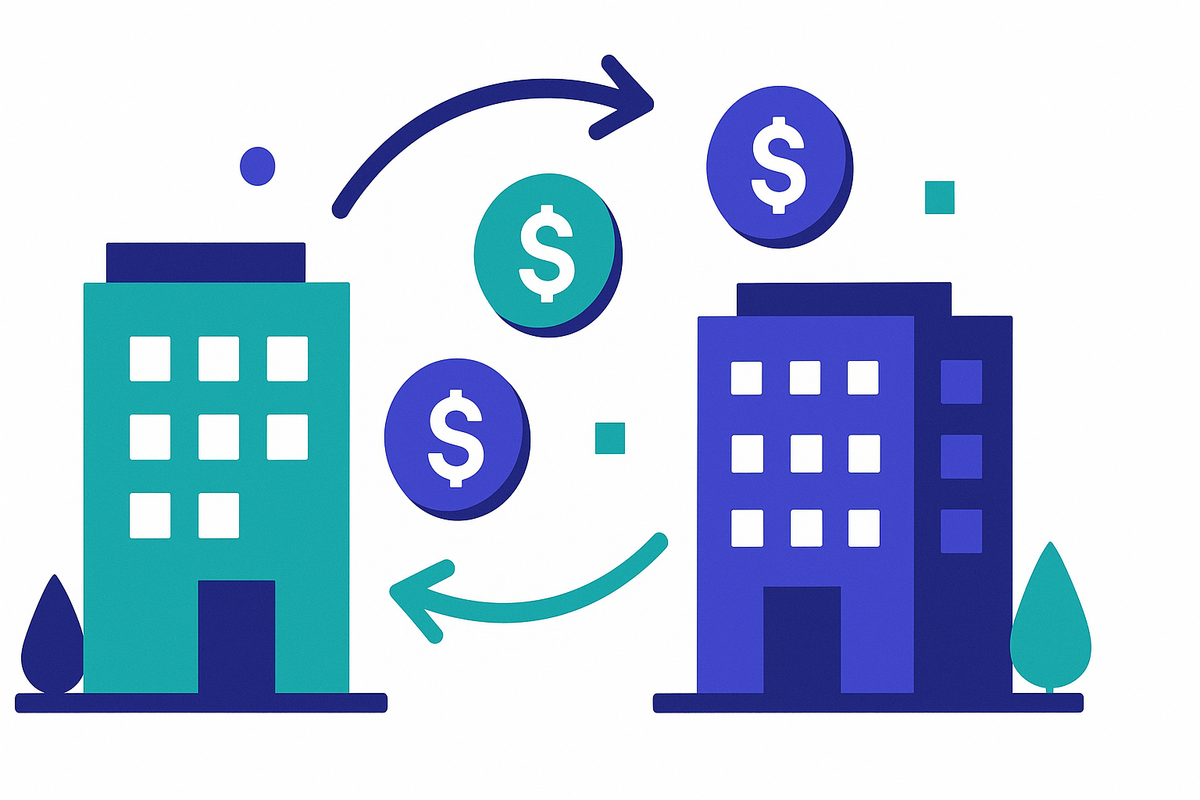
Stablecoin payments are no longer a crypto experiment on the edge of B2B trade. Cross-border sellers, marketplaces, and increasingly mid-market wholesalers are settling invoices in USDC or USDT because the money moves in minutes instead of days, and it moves on weekends, holidays, and outside banking hours. For a finance team watching a buyer's payment come through the SWIFT network 4-6 business days late, that speed is genuinely attractive.
But stablecoin payments change when money moves. They don't change whether a buyer will pay you in the first place. That distinction is the whole story of this post, and it's one a lot of teams adopting stablecoin rails are missing.
What Stablecoin Payments Actually Are
A stablecoin is a cryptocurrency pegged to a fiat currency, almost always the US dollar, designed to hold a stable 1:1 value rather than fluctuate like Bitcoin or Ethereum. USDC (issued by Circle) and USDT (issued by Tether) dominate B2B use cases because they're widely accepted, relatively liquid, and increasingly integrated into payment infrastructure that doesn't require either party to touch a crypto exchange directly.
For B2B trade specifically, stablecoins solve a real operational problem: cross-border payments through traditional correspondent banking are slow, expensive, and opaque. A wire from a buyer in Vietnam to a seller in the US can take 3-5 days, cost $25-50 in fees split across intermediary banks, and arrive with no clear audit trail of where the delay happened. A stablecoin payment on a fast blockchain settles in minutes for a fraction of the cost, with a fully transparent, timestamped record.
That's the pitch, and it's largely true. What it isn't is a buyer risk solution.
Why B2B Companies Are Adopting Stablecoin Settlement
The appeal breaks down into a few concrete advantages over traditional B2B payment terms and rails:
Speed. Settlement in minutes rather than days, 24/7, including weekends and bank holidays. For sellers extending net terms, faster settlement on the payment date itself shortens the gap between "buyer initiated payment" and "cash is actually usable."
Cost. No correspondent bank chain taking a cut at each hop. For high-frequency cross-border trade, this adds up.
Transparency. Every transaction is recorded on a public or permissioned ledger. There's no ambiguity about whether a payment was sent, when, or for how much, which reduces the "the wire is stuck somewhere" disputes that plague cross-border open account trade.
Currency stability for the seller. If you invoice in USD-pegged stablecoin rather than local currency with a long settlement window, you avoid the currency risk that comes from FX movement between invoice date and payment date.
Avoiding capital controls and banking friction. In some markets, moving USD out of the country through traditional banking channels is genuinely difficult. Stablecoin rails can route around some of that friction, which is one reason adoption is growing fastest in cross-border trade with buyers in markets with less mature banking infrastructure.
These are real, structural advantages. None of them tell you anything about whether the buyer sending you the stablecoin payment is a legitimate, creditworthy business that will actually pay on time, every time.
What Stablecoin Payments Don't Solve
This is the part that gets skipped in most of the "stablecoins for B2B" coverage, and it's the reason this topic belongs on a buyer risk blog rather than a payments blog.
A wallet address is not a verified business entity. When a buyer pays via bank wire, the payment moves through a regulated bank that has already run its own KYC/AML checks on the account holder. When a buyer pays via stablecoin, you may be receiving funds from a wallet address with no inherent connection to a verified legal entity, registered business, or identifiable beneficial owner unless you've done that verification yourself. Fast settlement doesn't replace the KYB (know your business) work of confirming who you're actually trading with.
Instant settlement removes your recourse window, not your risk. With a wire transfer gone wrong, or a check that bounces, there's typically a paper trail, a bank to dispute with, and (in check or ACH cases) sometimes a reversal mechanism. Stablecoin transactions are irreversible by design. If a payment is sent in error, sent by a bad actor, or part of a fraud scheme, there is no clawback. This shifts risk earlier in the relationship: you need to have your buyer diligence done before the transaction, because you have essentially zero recourse after.
Extending credit terms doesn't get easier just because settlement is faster. If you're offering net 30 or net 60 terms and the buyer happens to settle via stablecoin when the invoice comes due, the credit risk you took on at the point of the sale hasn't changed at all. You still extended unsecured credit to a buyer for 30-60 days based on your assessment of their ability and willingness to pay. Stablecoin settlement affects the mechanics of the payment date, not the underwriting decision you made weeks earlier. This is exactly the kind of decision that should go through proper buyer risk assessment before terms are ever offered.
Regulatory and compliance exposure is still evolving. Stablecoin regulation varies significantly by jurisdiction and is changing quickly. A buyer relationship that involves stablecoin settlement may carry compliance considerations (sanctions screening, source-of-funds questions, jurisdiction-specific restrictions) that traditional banking rails handle for you implicitly. Finance teams adopting stablecoin payments need to think through these questions explicitly rather than assuming the rail handles it.
The Risk Window Actually Shifts, It Doesn't Disappear
The clearest way to think about this: with traditional net terms, your buyer risk exposure spans the full credit period (30, 60, 90 days) during which the buyer's financial situation could deteriorate before they pay. With stablecoin settlement on the due date, that window compresses toward a single point in time, but the underwriting question, should you have extended credit to this buyer at all, is unchanged.
If anything, the compliance and identity-verification burden moves earlier and gets more important, not less. You need to know, before you ship goods or extend terms, that:
- The buyer is a real, registered business entity, not a shell or a fraudulent front
- You have accurate, current contact and business information to pursue recourse if something goes wrong
- The buyer has a track record (or verifiable financial signals) suggesting they can and will pay
- Any wallet or payment infrastructure the buyer uses is something you can trace back to that verified entity, not an anonymous intermediary
None of this changes because the settlement rail is faster. It arguably matters more, because once the stablecoin payment clears, there's no bank to call and no reversal to request if something was wrong on the front end.
Want to check a buyer's risk profile before you agree to any payment method, stablecoin or otherwise? Try BuyersIntelligence.ai - free, and takes about 60 seconds.
A Practical Framework for Finance Teams Evaluating Stablecoin Settlement
If a buyer is asking to pay via stablecoin, or you're considering offering it as a payment option, work through these questions before agreeing to terms:
1. Can you connect the wallet to a verified legal entity? Don't accept "the wallet is controlled by [company name]" at face value. Confirm the business is registered, active, and that you have a documented relationship (contract, PO, invoice) tying the wallet-holder to that entity.
2. What's your recourse plan if the payment never arrives or arrives short? Since stablecoin transactions can't be reversed by a bank, your recourse in a dispute is contractual and legal, not banking-system-based. Make sure your payment terms and contracts explicitly cover stablecoin settlement, including what happens on partial payment, late payment, or non-payment.
3. Have you run the same due diligence you'd run for any new buyer? Fast settlement is not a substitute for verifying a new B2B buyer before extending credit. If anything, run it earlier in the process, since you'll have less time to react once payment triggers ship a shipment or release of goods.
4. Does your credit policy address alternative settlement rails? Most B2B credit policies were written with wire, ACH, and check in mind. If stablecoin payment is becoming a real option for your buyers, your policy should explicitly define acceptable rails, verification requirements, and escalation paths for each.
5. Are you tracking this as a distinct risk category? If you monitor buyers on an ongoing basis (and you should, per continuous buyer monitoring), flag which buyers are settling via stablecoin so you can watch for patterns specific to that channel, like wallets associated with multiple unrelated business names, or payment sources that don't match the invoiced entity.
Where Stablecoin Settlement Genuinely Helps
None of the above is an argument against stablecoin payments. For a buyer you've already properly vetted, with clear entity verification and an established payment history, faster settlement is a straightforward operational win: less time waiting on cash, less FX exposure between invoice and payment, lower transfer fees on repeat cross-border trade.
The improvement stablecoins offer is in the mechanics of moving money that's already committed. It's not an improvement in your ability to judge whether that money is coming at all. Those are two separate problems, and conflating them is where finance teams get exposed. A buyer who was a credit risk on a wire transfer is exactly the same credit risk on a stablecoin transfer, just settled faster once (or if) they decide to pay.
The Bottom Line
Stablecoin payments are a real, growing part of B2B settlement, especially for cross-border trade where speed, cost, and transparency genuinely matter. But they solve a settlement-mechanics problem, not a buyer-risk problem. Before offering or accepting stablecoin as a payment rail with any buyer, run the same identity verification and creditworthiness checks you'd run for any other payment method, and do it earlier, since instant, irreversible settlement leaves you with far less room to react if something goes wrong.
The rail is new. The underwriting discipline it requires is not.
Stop guessing about buyer risk, no matter which rail they pay you on. Get instant buyer intelligence at BuyersIntelligence.ai - free to try.
Stop guessing about buyer risk. Get instant buyer intelligence.
Try BuyersIntelligence.ai - Free →