Distributor Credit Risk: Why Channel Partners Need a Different Underwriting Playbook
Distributors and resellers don't behave like direct buyers. Here's how to assess distributor credit risk, spot hidden channel exposure, and structure terms that protect cash flow.
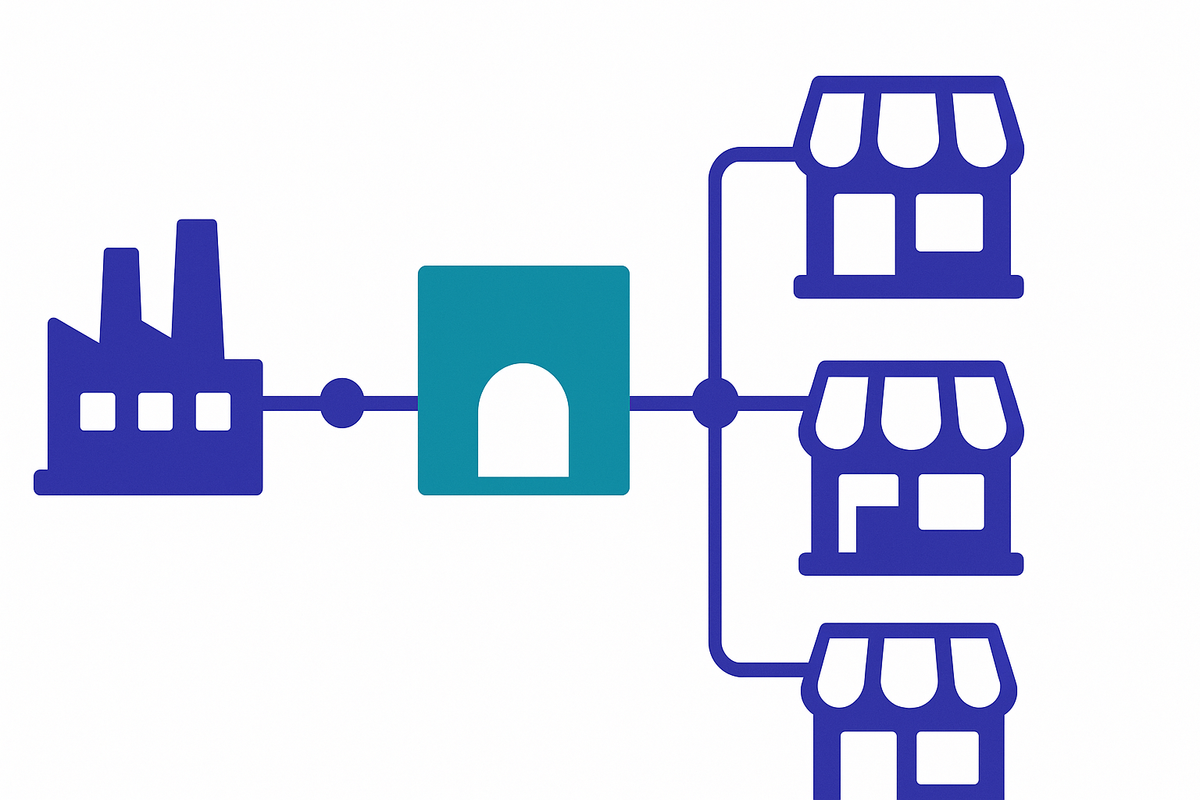
Most B2B credit policies are written for a simple relationship: you sell to a company, that company pays you, and if they don't pay, you know exactly who to chase. Distributor and reseller relationships don't work that way. A distributor sits between you and the actual end market - buying in volume, marking up, extending its own credit downstream, and often holding inventory you can't see and payment obligations you don't control. Treat that relationship like a normal B2B buyer and you'll misprice the risk almost every time.
This is a gap in how most finance teams think about credit. They have a process for verifying a new B2B buyer before extending credit and a process for running a business credit check, but they apply the exact same checklist to a distributor moving six figures of product a month through a network of sub-resellers they've never heard of. Distributor credit risk needs its own playbook, because the failure modes are different.
Why Channel Credit Risk Is Different From Direct Buyer Risk
When you sell direct, your buyer's ability to pay is a function of their own revenue, margins, and cash position. When you sell through a distributor, their ability to pay you is a function of something else entirely: how well they're collecting from their customers, how fast their inventory is turning, and how many other suppliers are competing for the same finite cash they have on hand.
A distributor can look financially healthy on paper - decent revenue, reasonable margins - and still be a payment risk because:
- They're carrying too much inventory relative to sell-through, tying up cash that should be flowing back to you
- They're extending generous terms to their own downstream customers, so their receivables are aging faster than their payables to you
- You're one of a dozen suppliers competing for the same cash, and payment priority isn't guaranteed to go to whoever has the tightest terms
This is why a standard B2B credit scoring model built for direct buyers often misreads channel partners. The inputs matter, but the weighting needs to change.
What Makes Distributor and Reseller Credit Risk Unique
You have no visibility into the end customer
When you sell direct, you know who owes you money. When you sell through a distributor, the distributor's customers are the ones actually generating the cash that eventually pays you - and you typically have zero visibility into whether those downstream accounts are healthy, current, or already 90 days past due to the distributor. Risk is happening two steps removed from where you can see it.
Volume creates pressure to relax terms
Distributors are often your largest accounts by volume, which creates a structural bias toward extending them more credit, not less. Sales teams push for it because the order size is attractive. But volume and creditworthiness are not the same thing - a distributor doing $2M a year through you can still be undercapitalized relative to that volume, especially if they're growing fast and financing growth with your receivables.
Rebates, returns, and chargebacks obscure true exposure
Distributor agreements are rarely simple invoice-and-pay. Volume rebates, marketing development funds, price protection, and return allowances all net against what's actually owed - which means the number on your aging report often isn't the number that matters. A distributor's true net exposure to you can be materially different from gross invoiced amounts, and if your credit limit is set against gross figures, you may be more exposed than your dashboard suggests.
Distributor financial health depends on inventory turns, not just revenue
A wholesaler or distributor's cash position is tied directly to how fast product moves off their shelves. Slow-moving inventory is dead cash - and dead cash is exactly what turns a reliable payer into a late one. This is a metric most credit teams don't even ask for, because it's specific to channel businesses rather than general financial statement analysis.
The Hidden Risks in Distributor and Reseller Relationships
Channel stuffing. A distributor (or your own sales team) pushes more inventory into the channel than the end market can absorb, usually to hit a quarterly number. The distributor now owes you for product it hasn't sold and may not sell for months. This is one of the most common and least discussed sources of channel bad debt.
Concentration risk running through one partner. If a single distributor represents a large share of your revenue, you've effectively concentrated your customer concentration risk into one legal entity whose own financial stress can hit your books hard and fast. Losing one direct customer that's 3% of revenue is manageable. Losing a master distributor that's 25% of revenue is a different category of event.
Sub-distributor and second-tier reseller risk. In many industries, your direct distributor sells to sub-distributors or regional resellers you never contract with directly. If that second tier collapses, your distributor's cash position collapses with it, and the shock arrives at your door with no warning, because you never had a line of sight into that layer to begin with.
Payment terms creep. Channel relationships tend to start with reasonable terms and drift longer over time - a few days here, a "let's just push it to next month" there, especially when the distributor is a long-tenured, trusted partner. Terms creep is gradual enough that it rarely triggers a formal review, which is exactly why it needs continuous monitoring rather than a one-time annual check.
How to Assess Distributor Credit Risk in Practice
Build a channel-specific credit application. Your standard B2B credit application should be extended for distributors to include: number and geography of sub-resellers or downstream accounts, average days sales outstanding on their own receivables, inventory turnover ratio, concentration of their own customer base, and any exclusivity or minimum purchase commitments that lock both parties into volume regardless of market conditions.
Ask for inventory and sell-through data, not just financials. Financial statements tell you where a distributor has been. Inventory turns and sell-through velocity tell you where their cash is right now. A distributor sitting on 120 days of inventory is carrying real risk even if last year's income statement looked fine.
Set credit limits against net exposure, not gross invoiced amounts. Build rebates, returns, and any standing credit memos into how you calculate exposure, and review that net number - not just the raw invoice total - when deciding on a limit increase. This connects directly to your broader approach to setting B2B credit limits that protect cash flow.
Monitor continuously, weighted toward payment behavior over financial statement age. Annual financial reviews miss the drift that actually sinks channel relationships - a distributor can look fine on their year-end statement and still be sliding into trouble by Q3. Payment timing trends, partial payment patterns, and requests for extended terms are earlier and more reliable signals than a stale balance sheet.
Segment your channel partners by risk tier, not just by volume. Your biggest distributor by revenue isn't automatically your safest. Score channel partners on a combination of size, tenure, payment history, inventory discipline, and downstream concentration - and revisit the tiering quarterly, not annually.
Want to check a distributor's risk profile in 60 seconds instead of building this from scratch? Try BuyersIntelligence.ai - free.
Structuring Terms to Protect Cash Flow with Channel Partners
Volume-based credit tiers work better for distributors than flat terms. Instead of giving every distributor the same net-30, tie term length and credit limit growth to demonstrated payment behavior over a rolling period, not just to order size. A distributor that pays reliably at a smaller volume earns better terms as they scale; one with a spotty payment history doesn't get more rope just because the order got bigger.
Reconcile rebates and returns on a fixed cadence - monthly, not annually - so neither side is surprised by a large true-up that suddenly changes what's actually owed. This also gives you an early warning signal: a distributor that starts pushing back on reconciliation timing or disputing rebate calculations more aggressively than usual is often signaling cash pressure before it shows up anywhere else.
For smaller or newer channel partners without an established track record, a personal guarantee from an owner can be a reasonable condition for extending meaningful credit, particularly for distributorships structured as thinly capitalized LLCs with limited standalone assets.
Consider requiring minimum sell-through reporting as a condition of maintaining higher credit limits - not to micromanage the relationship, but because it's the single best leading indicator you have into whether the cash to pay you actually exists downstream.
When to Put a Distributor on Credit Hold
The same credit hold management principles that apply to direct buyers apply here, with a channel-specific twist: because distributors are often high-volume, high-visibility relationships, there's more internal pressure to look past early warning signs. Don't let deal size override policy. The signals that should trigger a hold review are the same ones that matter for any buyer - slowing payment velocity, partial payments, requests for term extensions - but for distributors, add inventory buildup without corresponding sell-through and any sudden change in sub-distributor relationships to your watch list.
Walking a channel partner back from full credit to a more restricted arrangement - COD, reduced limits, or shortened terms - is uncomfortable when the relationship represents meaningful revenue. But the alternative is discovering the exposure only after the distributor can no longer pay, at which point you're one of many suppliers competing for whatever cash is left in a wind-down.
The Bottom Line
Distributor and reseller relationships carry a version of credit risk that standard buyer underwriting wasn't built for - multi-tier exposure, inventory-driven cash cycles, and rebate structures that obscure true net owed. Treating a distributor like a standard B2B buyer means underpricing exactly the accounts that can do the most damage to your receivables if they go wrong. Build a channel-specific credit application, ask for inventory and sell-through data alongside financials, set limits against net rather than gross exposure, and monitor continuously rather than annually. This is exactly the layered, ongoing view that continuous buyer monitoring and a documented credit policy are designed to support, applied to the partners who need it most.
Ready to bring real visibility to your channel risk? Get instant buyer intelligence at BuyersIntelligence.ai and stop underwriting your biggest accounts on gut feel.
Stop guessing about buyer risk. Get instant buyer intelligence.
Try BuyersIntelligence.ai - Free →