B2B BNPL: Why Buy Now, Pay Later Still Needs Real Buyer Risk Assessment
B2B BNPL is spreading fast across ecommerce and wholesale checkout flows. Here's why embedded credit doesn't remove underwriting risk - it just moves it, and often hides it.
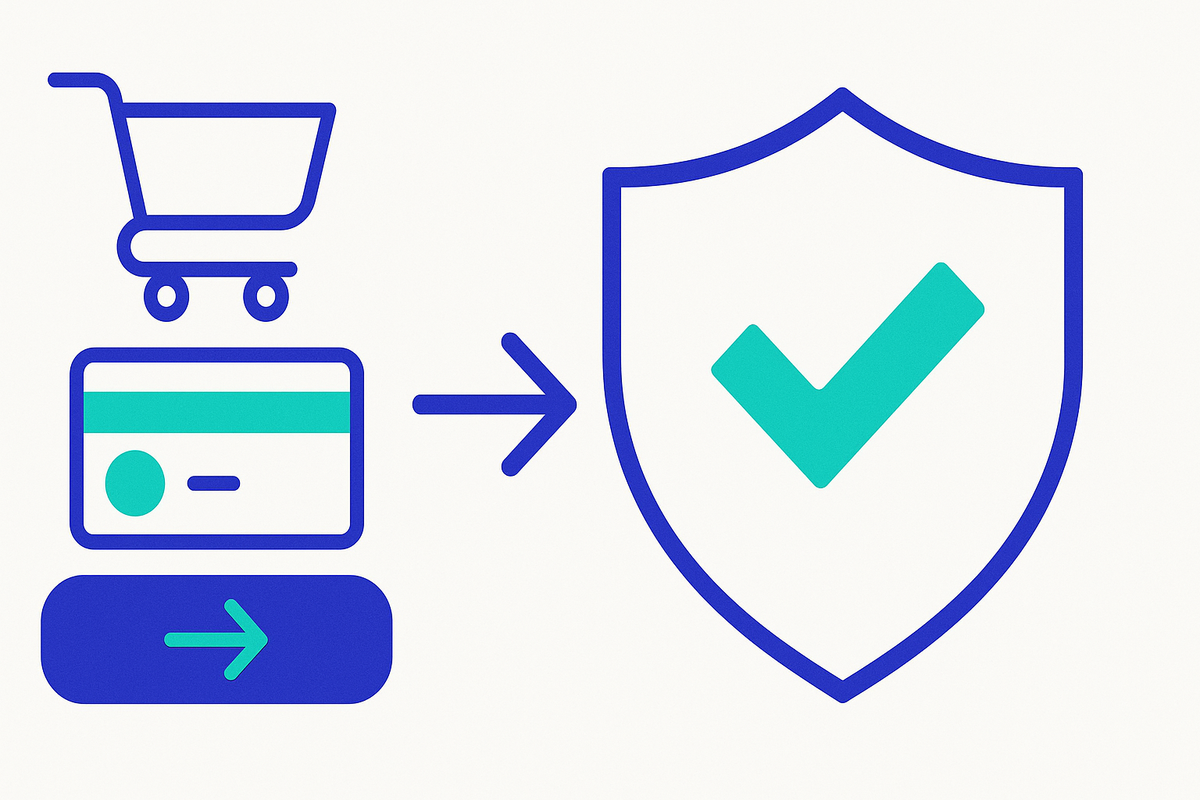
B2B buy now, pay later (BNPL) is showing up everywhere - checkout pages on wholesale marketplaces, ecommerce B2B storefronts, and vertical SaaS platforms that added "pay in 30/60/90" as a feature almost overnight. The pitch is simple: let buyers get instant credit at checkout, remove friction from the sale, and let a financing partner or embedded lending layer handle the rest.
The part that gets skipped in most of these pitches: someone still has to decide whether that buyer is going to pay. B2B BNPL doesn't eliminate credit risk. It just moves the underwriting decision earlier, compresses it into seconds, and often hides it behind a slick API. If the buyer risk assessment underneath a B2B BNPL program is weak, the losses show up later - just with more transactions and less visibility into who's actually behind the wheel.
This post breaks down what B2B BNPL actually is, how it differs from consumer BNPL and traditional trade credit, where the underwriting gaps usually hide, and what a real buyer risk process looks like when credit decisions happen at checkout speed.
What Is B2B BNPL, Exactly?
B2B BNPL is embedded financing that lets a business buyer defer payment on a purchase - typically net 30, 60, or 90 days - approved instantly at the point of sale rather than through a traditional application and underwriting cycle. It's usually offered by:
- A fintech or embedded lending provider integrated into a marketplace or ecommerce checkout
- A distributor or supplier offering instant credit terms directly, often white-labeled through a financing partner
- A vertical SaaS platform (procurement, wholesale, dropshipping) bundling financing as a checkout feature
The mechanics look like consumer BNPL: click "pay later," get an instant decision, complete the order. But the underlying risk profile is nothing like consumer BNPL, and treating it the same way is where a lot of B2B BNPL programs get into trouble.
How B2B BNPL Differs From Consumer BNPL
Consumer BNPL providers (Klarna, Affirm, Afterpay) built their underwriting around thin-file consumer credit data, small transaction sizes, and high volume. A bad decision on a $150 purchase is a rounding error spread across millions of transactions.
B2B BNPL doesn't have that luxury:
Transaction size is materially higher. A B2B order can be 10x to 100x a typical consumer BNPL transaction. One bad approval can wipe out the margin on dozens of good ones.
The "buyer" is a legal entity, not a person. Business credit data is fragmented, inconsistent, and often stale compared to consumer credit bureaus. There's no FICO-equivalent standard score that works the same way across every industry and geography. This is the same fragmentation problem covered in our guide to running a business credit check - the data exists, but it's scattered across sources that don't talk to each other.
Repayment behavior is different. Consumers who can't pay usually stop buying. Businesses that are financially stressed often keep ordering - sometimes precisely because they're trying to stretch cash by extending every payable they can, BNPL included. That's a distinct risk signal, and it's why continuous buyer monitoring matters more in B2B BNPL than a one-time approval check.
Fraud looks different too. Business identity fraud, shell entities, and first-party fraud (a real business ordering with no intention of paying because it's already failing) are common patterns that consumer-style device fingerprinting and identity checks don't catch well.
Where the Underwriting Gap Hides
Most B2B BNPL programs fail in one of three places:
1. The approval logic is copied from consumer BNPL playbooks. Fast decisioning models built for consumer thin-file scoring get applied to business entities without adjusting for the fact that business risk signals (payment behavior with other suppliers, litigation history, entity age and structure, industry-specific seasonality) are completely different inputs than a consumer credit score.
2. Underwriting happens once, at signup, and never again. A buyer approved for a $5,000 credit line in January can be in financial distress by June. Static, point-in-time approval is the single biggest gap in embedded B2B credit - it's the same failure mode described in our piece on why annual credit reviews are dead, just compressed into a checkout flow instead of a yearly cycle.
3. Speed gets prioritized over data depth. Instant approval is the entire value proposition of BNPL, so providers lean on the thinnest possible data set to hit sub-second decision times. That's a reasonable tradeoff for a $200 order. It's a dangerous one for a $50,000 wholesale purchase order.
Want to see what a real-time buyer risk profile looks like without sacrificing checkout speed? Try BuyersIntelligence.ai - buyer intelligence built for instant B2B decisions, not adapted from consumer credit models.
B2B BNPL vs Traditional Trade Credit: What Actually Changes
Traditional trade credit (net 30/60/90 issued directly by a supplier) and B2B BNPL are structurally similar - both defer payment and both require a credit decision. The differences are speed and who owns the risk:
| Traditional Trade Credit | B2B BNPL | |
|---|---|---|
| Decision speed | Days to weeks | Seconds |
| Who underwrites | Supplier's credit/finance team | Embedded lender or platform |
| Data depth | Credit app, references, financials | Limited data, instant sources only |
| Risk owner | Supplier (unless factored/insured) | Depends on program structure |
| Review cadence | Often annual or ad hoc | Rarely reviewed post-approval |
The key question for any business offering B2B BNPL - whether as the supplier or the platform - is who actually holds the credit risk when a buyer defaults. Some embedded lending arrangements pass the risk to a third-party financier. Others leave the supplier holding the receivable if the financing partner's underwriting misses something. Before adopting a BNPL program, it's worth reading the fine print the same way you'd evaluate payment terms in general - understand exactly what happens if the buyer doesn't pay, and who eats that loss.
Building Real Buyer Risk Assessment Into a B2B BNPL Program
If you're offering B2B BNPL - directly or through a financing partner - the underwriting doesn't need to be slow to be real. It needs to be structured correctly. A few practices that make instant decisions safer:
Segment credit limits by risk tier, not a flat cap. Instead of one universal BNPL limit for every buyer, tier limits based on entity age, industry risk, and available business data - similar to the approach in our guide on setting B2B credit limits that protect cash flow. A newly formed entity in a volatile industry shouldn't get the same instant limit as an established buyer with a clean payment history.
Pull real-time signals, not static ones. Business registration status, UCC filings, litigation records, and payment behavior with other vendors can all be checked in real time today. This is the same shift described in B2B credit scoring: traditional vs AI-powered approaches - the technology to do fast, deep underwriting exists now. Using a thin consumer-style data set for a B2B decision is a choice, not a technical limitation.
Re-score buyers continuously, not just at approval. A credit line issued in month one should be re-evaluated as new data comes in - not frozen until a manual review catches a problem months later. Embedding ongoing monitoring into the BNPL flow closes the single biggest gap identified above.
Build the credit policy before the checkout button, not after. BNPL programs launched under pressure to "add financing" often skip the step of writing an actual credit policy - approval criteria, limit tiers, escalation rules, and default handling. Our guide on building a B2B credit policy from scratch walks through what that policy needs to cover, and it applies just as much to an instant checkout decision as to a traditional credit application.
Treat the application step as a data source, even when it's invisible to the buyer. BNPL hides the "application" behind a single click, but the underlying data collection still matters. The principles in how to build a B2B credit application that actually works apply here too - just automated and compressed into the checkout moment instead of a form.
The Onboarding Connection
B2B BNPL is often the first credit decision a new buyer relationship is built on - which means it's really an onboarding decision wearing a checkout disguise. A buyer's first BNPL approval sets the tone for the entire credit relationship: the limit they start at, the terms they expect, and the monitoring cadence that follows. Treating that first approval with the same rigor described in how to build a buyer onboarding process that scales prevents the common failure mode of an instant "yes" today turning into an unrecoverable receivable in 90 days.
Best Practices for B2B BNPL Risk Management
Pulling this together, a B2B BNPL program that doesn't blow up on the first bad cohort of buyers typically has:
- Risk-tiered credit limits instead of one flat approval amount
- Real-time business data pulled at the moment of decision, not a static score
- Continuous re-scoring after approval, not just a point-in-time check
- A written credit policy that defines approval logic, escalation, and default handling
- Clear ownership of default risk between the supplier and any embedded financing partner
- A feedback loop from actual payment behavior back into the underwriting model
None of this requires slowing down checkout to days. It requires having the right buyer risk infrastructure running underneath the instant decision - which is exactly the gap most B2B BNPL programs built on consumer-style tooling never close.
The Bottom Line
B2B BNPL is a genuinely useful tool for reducing checkout friction and winning more orders. But "instant" and "unrisked" are not the same thing. Every B2B BNPL approval is a credit decision, full stop - it just happens faster and with less visible scrutiny than a traditional application. The businesses that get this right build real buyer risk assessment into the instant decision instead of skipping it for speed. The ones that don't find out the difference the hard way, usually in the form of a receivables writeoff a few months after a buyer's BNPL limit looked perfectly fine on approval day.
If your checkout, marketplace, or credit team is evaluating a B2B BNPL program - or already running one without real-time buyer risk data behind it - BuyersIntelligence.ai gives you instant buyer risk profiles built for B2B, not adapted from consumer credit models. Check a buyer's risk profile in 60 seconds, before the credit line goes out - not after it's already a problem.
Stop guessing about buyer risk. Get instant buyer intelligence.
Try BuyersIntelligence.ai - Free →