Country Risk Guide: Selling on Credit to the Middle East and Africa
A practical guide to country risk in the Middle East and Africa for B2B exporters - covering payment culture, legal enforcement, sanctions exposure, and how to structure credit terms by market.
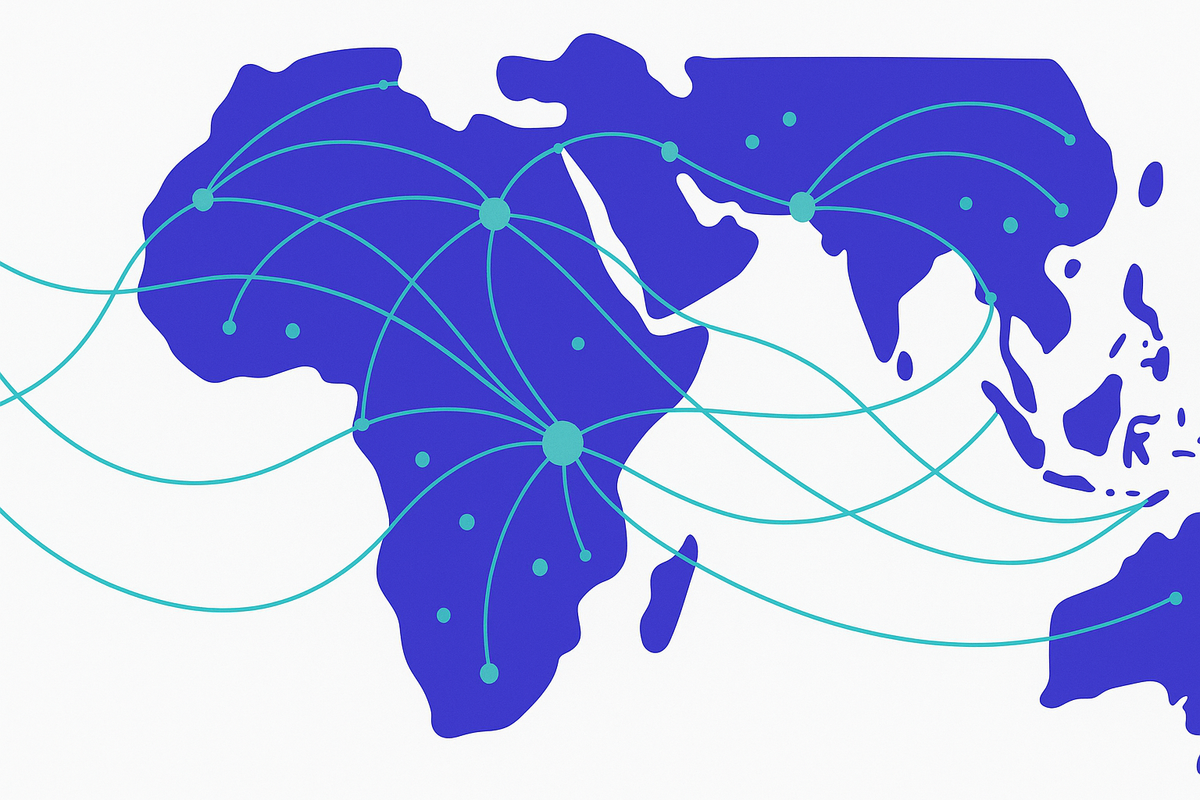
If you sell on credit terms into the Middle East or Africa, you already know the pitch decks and the reality rarely match. Analysts talk about "frontier growth markets" and "rising middle classes." Your finance team is stuck asking a much narrower question: will this buyer in Lagos, Dubai, or Nairobi actually pay the invoice on time - and if not, what recourse do you have?
Country risk in the Middle East and Africa (MEA) is not one thing. The region spans some of the world's most sophisticated trade finance hubs (UAE, Saudi Arabia) and some of its most volatile currency and enforcement environments (parts of West and East Africa). Treating "MEA" as a single risk bucket is how finance teams get burned. This guide breaks down what actually drives country risk in the region and how to build credit terms that protect your cash flow without shutting out good buyers.
Why Country Risk in the Middle East and Africa Is Different
Most country risk frameworks were built around G20 markets with stable currencies, predictable courts, and deep credit bureau data. None of that travels cleanly to MEA.
Three structural factors drive country risk B2B trade decisions in this region:
Currency volatility and convertibility. Several African currencies (Nigerian naira, Egyptian pound, Ethiopian birr) have experienced sharp devaluations or capital controls in the last few years. A buyer can be creditworthy in local currency terms and still default because they cannot legally convert or repatriate hard currency to pay a USD or EUR invoice.
Enforcement gaps. Winning a judgment against a defaulting buyer is one thing. Collecting on it is another. Court timelines in many MEA jurisdictions run 2-5 years, and cross-border enforcement of foreign judgments is inconsistent outside of a handful of bilateral treaties.
Sanctions and compliance exposure. Parts of the region carry elevated sanctions risk - either direct (specific countries and entities) or indirect (buyers with ownership structures that touch sanctioned parties). This is a distinct risk category from payment default, but it can freeze funds and destroy a receivable just as effectively.
Understanding buyer risk in international trade means separating these three layers instead of collapsing them into a single "risky region" label.
Middle East: Sophisticated but Uneven
The Gulf Cooperation Council (GCC) countries - UAE, Saudi Arabia, Qatar, Kuwait, Bahrain, Oman - have some of the most developed trade finance infrastructure outside the US and Europe. Free zones like Dubai's DMCC and JAFZA exist specifically to facilitate B2B trade with clear legal frameworks for foreign companies.
That said, three things trip up exporters:
- Bounced cheque law. In the UAE, post-dated cheques are still a common commercial credit instrument, and historically a bounced cheque could trigger criminal liability for the signatory. Reforms in recent years have decriminalized many cases, but the practice still shapes how local buyers think about payment commitments - and how seriously they take a due date.
- Free zone vs. mainland entities. A buyer operating from a free zone company may have different asset visibility and enforcement pathways than a mainland-licensed entity. Always confirm which entity type you are actually contracting with.
- Family conglomerate structures. Much of Gulf commerce runs through large family-owned groups with dozens of subsidiaries. A single subsidiary's balance sheet can look strong or weak in isolation while the parent group's actual financial position is opaque. Verify B2B buyer identity and group structure before extending meaningful credit.
Outside the GCC, Egypt, Jordan, and Iraq present a different profile: higher inflation, more foreign exchange friction, and thinner formal credit data. Payment terms here should lean shorter, and letters of credit or partial prepayment are common risk mitigants even for established relationships.
Africa: Enormous Variance by Market
Africa is 54 countries, and lumping them together is the single biggest mistake finance teams make when assessing country risk B2B trade in the region.
Tier 1 markets (relatively developed trade infrastructure): South Africa, Kenya, Morocco, Egypt, and increasingly Rwanda have functioning commercial courts, credit bureaus, and banking systems that support standard net terms with reasonable confidence - assuming the individual buyer clears standard due diligence.
Tier 2 markets (workable but requiring more structure): Nigeria, Ghana, Côte d'Ivoire, Tanzania, and Senegal have real commercial ecosystems but more currency and liquidity volatility. Nigeria in particular has seen repeated FX crises where importers hold naira but cannot access dollars through official channels to pay foreign suppliers - a solvency-adjacent risk that has nothing to do with the buyer's underlying business performance.
Tier 3 markets (high friction): Smaller or more fragile economies across parts of Central and East Africa often require prepayment, letters of credit, or credit insurance as a precondition for any meaningful trade credit, regardless of individual buyer quality.
The practical implication: your credit policy needs a country tier built into it, not just a buyer score. A strong buyer in a Tier 3 country can still represent more risk than a mediocre buyer in a Tier 1 market, purely because of currency and transfer risk sitting on top of buyer-level risk.
Sanctions and Compliance: The Layer Most Teams Skip
This is where MEA differs most sharply from, say, Western Europe. Parts of the region - including certain jurisdictions and specific entities across the Gulf, North Africa, and the Horn of Africa - carry active sanctions regimes from OFAC, the EU, or the UK.
The risk is rarely "this buyer is sanctioned" in an obvious way. It is usually structural: a buyer with a shareholder, director, or affiliated entity that has exposure to a sanctioned party or jurisdiction. This kind of exposure will not show up in a standard credit check. It requires actual ownership and beneficial-owner screening as part of onboarding - the same KYB (know your business) discipline you'd apply anywhere, just with sanctions lists layered in as a specific check for this region.
Skipping this step does not just create payment default risk. It can create regulatory exposure for your own company. This is one of the clearest cases where continuous buyer monitoring beats a one-time check at onboarding - sanctions lists and ownership structures change, and a buyer that cleared screening 18 months ago may not clear it today.
How to Set Terms by Market Tier
A practical framework for structuring payment terms across the region:
Tier 1 markets (South Africa, UAE mainland, Saudi Arabia, established Egypt/Morocco importers): Standard net 30-60 terms are workable for buyers that clear normal due diligence - business registration verification, financial statements where available, trade references, and years in operation.
Tier 2 markets (Nigeria, Ghana, Kenya SMEs, broader GCC free zone entities): Shorter terms (net 15-30), lower initial credit limits with room to expand based on payment history, and consideration of partial prepayment for first orders.
Tier 3 markets and any buyer with sanctions-adjacent exposure: Letters of credit, credit insurance, or prepayment as standard practice rather than exception. Trade credit risk in these markets is often driven more by macro and transfer conditions than by individual buyer quality, so buyer-level scoring alone will understate real exposure.
Across every tier, build in a review trigger: currency devaluation events, central bank FX restriction announcements, or sovereign credit downgrades should automatically flag every open receivable in that country for reassessment - not wait for the next scheduled review cycle.
Want to check a buyer's risk profile in 60 seconds - including ownership structure and country-level flags - before you extend terms? Try BuyersIntelligence.ai free.
Practical Due Diligence Checklist for MEA Buyers
Before extending credit to a new buyer in the Middle East or Africa, confirm:
- Legal entity verification - registered business name, registration number, and jurisdiction (mainland vs. free zone where relevant)
- Beneficial ownership - who actually controls the company, and does that ownership chain touch any sanctioned entity or jurisdiction
- Years in operation and trade history - newer entities warrant more conservative terms regardless of stated financials
- Currency and transfer risk for the specific country - is there an active FX shortage, capital control regime, or recent devaluation
- Trade references from other foreign suppliers - how has this buyer actually performed on hard-currency invoices, not just local ones
- Country tier classification - does your internal policy already have a tier assigned, or are you assessing this market for the first time
This checklist takes minutes with the right tooling and can be the difference between a receivable that gets collected and one that gets written off eighteen months later as a country-risk surprise nobody flagged early.
The Bottom Line
Country risk in the Middle East and Africa rewards specificity and punishes generalization. The region includes some of the world's best-run trade finance hubs and some of its most difficult collection environments, often just a few hundred kilometers apart. A credit policy that treats "MEA" as a single risk category will either turn away good buyers in Tier 1 markets out of excess caution, or get blindsided by currency and sanctions exposure in Tier 3 markets it never properly screened.
The fix is not more paperwork - it's better inputs. Country tiering, ownership screening, and continuous monitoring of FX and sanctions conditions turn a vague "emerging market risk" conversation into a defensible, buyer-specific credit decision.
Stop guessing about buyer risk in unfamiliar markets. BuyersIntelligence.ai gives finance teams instant buyer and country-level risk profiles - so you can extend credit with confidence anywhere you do business. Try it free.
Stop guessing about buyer risk. Get instant buyer intelligence.
Try BuyersIntelligence.ai - Free →